

Marine Hose Clamps: Choosing Clamps for Boats and Saltwater Environments
Marine hose-clamp selection begins with where the connection is installed and what a failure would mean. A clamp on a sheltered freshwater line is not the same decision as one near salt spray, in a damp bilge, or on a critical hose. Confirm the complete connection and its service requirements before selecting hardware.
1. Start with Location and Failure Consequence
Identify the onboard location, exposure, access, and effect of a leak. Saltwater, trapped moisture, heat, vibration, chemical contact, and limited inspection access can all change the requirement. A failure affecting fuel, raw-water, exhaust, propulsion, electrical equipment, or buoyancy needs the applicable vessel, equipment, hose, fitting, and installation requirements—not a generic replacement decision.
For waterline-adjacent or otherwise critical connections, use the documented system requirements and inspect the whole assembly. A clamp does not correct a damaged hose, corroded fitting, unsuitable connection design, or missing installation clearance.
2. Compare 304, 316, and Complete Clamp Construction
“Stainless steel” is not a complete material specification. 304 and 316 are distinct grades, and the clamp’s band, housing, screw, bolt, and liner may use different materials. In a chloride-rich environment, the material evidence for every corrosion-sensitive component matters—not only the band.
316 may be specified where additional chloride-corrosion resistance is required, but call a clamp 316 or marine-grade only when the product documentation establishes that construction. Do not infer 316, salt-spray endurance, or marine suitability from a product name, photo, blog anchor, or a broad category label.
3. “All-Stainless” vs “Stainless Band Only”
An all-stainless description should be supported for the relevant metallic components, including the band, housing, and tightening mechanism where applicable. A stainless band alone does not prove that the screw, housing, or fastening hardware has matching corrosion resistance. Those components can become the first point of failure in a damp or salty location.
Before procurement, verify the stated grade and construction against the manufacturer’s product data. Do not link “316 marine-grade” wording to a spring-clamp assortment or a generic 304 worm-drive product. Correct material terminology and product matching first.
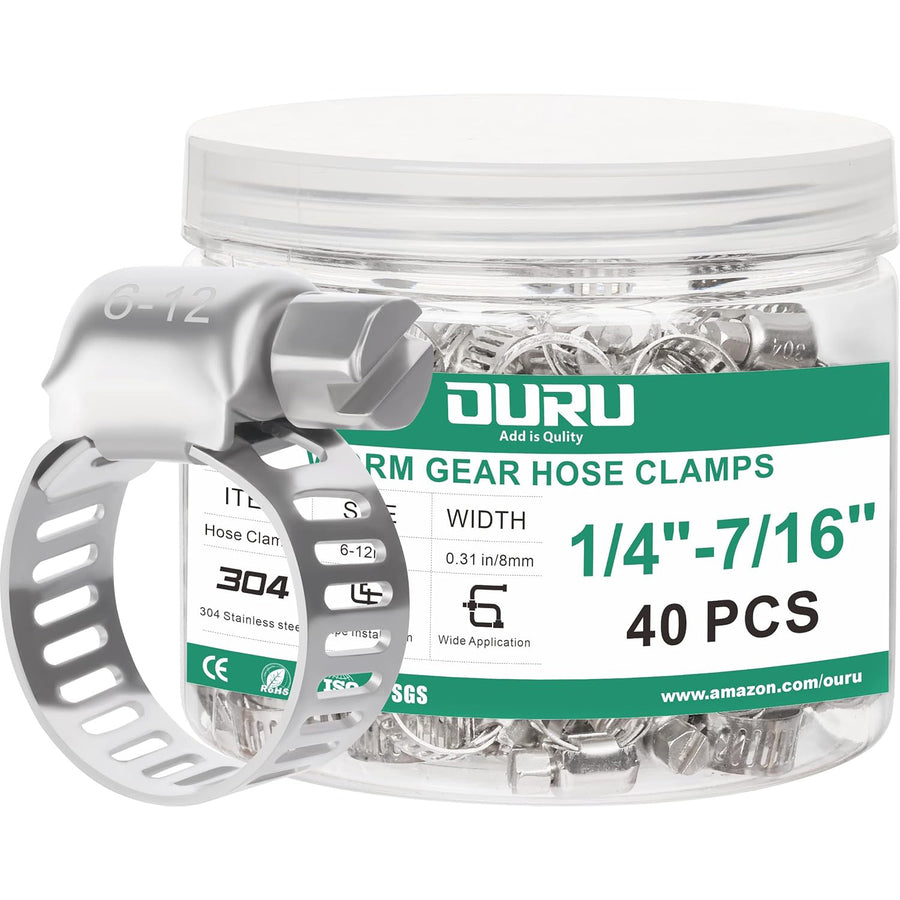
304 Stainless Steel Worm-Gear Hose Clamps
For size-matched hose connections where 304 stainless steel has been separately confirmed appropriate. Check the clamp range, complete construction, and installation requirements. This product is not presented as 316 or marine-grade.
View Material & Size Details4. Select the Required Clamp Structure
Use the structure specified for the connection. Worm-gear clamps are screw-adjusted and must be selected by the assembled outside diameter. T-bolt clamps should be used only where the equipment documentation calls for that structure and range. Constant-tension clamps are selected when the connection is designed to accommodate temperature-related movement. A small spring-clamp assortment is not automatically a suitable substitute for a large boat hose.
Construction alone does not establish pressure rating, marine approval, or compatibility. Confirm the hose material, fitting geometry, clamp range, exposure, load, and service requirements as a system.

Spring Band Hose Clamps
For compatible small-diameter connections that specifically call for a spring-style clamp. Check the size range and system requirement; this product is not a 316 marine-grade or large-diameter substitute.
View Spring Clamp Sizes5. Check Space, Orientation, and Double-Clamp Requirements
Measure the hose after it is fully seated on its fitting. The clamp needs a supported, accessible position with clearance for installation, inspection, and future removal. Keep the screw housing or bolt clear of adjacent equipment and consider vibration, abrasion, and drainage paths.
Some installations specify two clamps, their orientation, or a defined spacing. Double clamping is not a cure for a wrong size, damaged hose, corroded fitting, or incorrect clamp type. Apply it only where the equipment or installation requirement calls for it, using two correctly matched clamps.
6. Install, Inspect, and Recheck
Clean the hose and fitting. Replace hardened, swollen, cut, cracked, or otherwise damaged hose before installing new hardware. Position the clamp squarely, use a tool that fits the actual fastener, and tighten gradually according to the applicable requirements. Do not force a clamp that reaches the end of its range or overtighten to compensate for an unsuitable connection.
After returning the system to service, inspect for leaks, hose deformation, band misalignment, loosened fasteners, and early corrosion. Recheck after the first operating or thermal cycle when the system requires it, then establish a recurring inspection interval that reflects the exposure and consequence of failure.
Understand Clamp Materials Before You Buy
For a broader material comparison, read Hose Clamp Materials Explained: Stainless Steel vs Other Types. Use that guidance together with the actual product data and the vessel’s connection requirements.
Key Takeaway
For marine connections, select by verified material, complete construction, correct range, specified clamp type, and the importance of the connection. Do not treat a generic stainless label as proof of 316 or marine-system suitability.
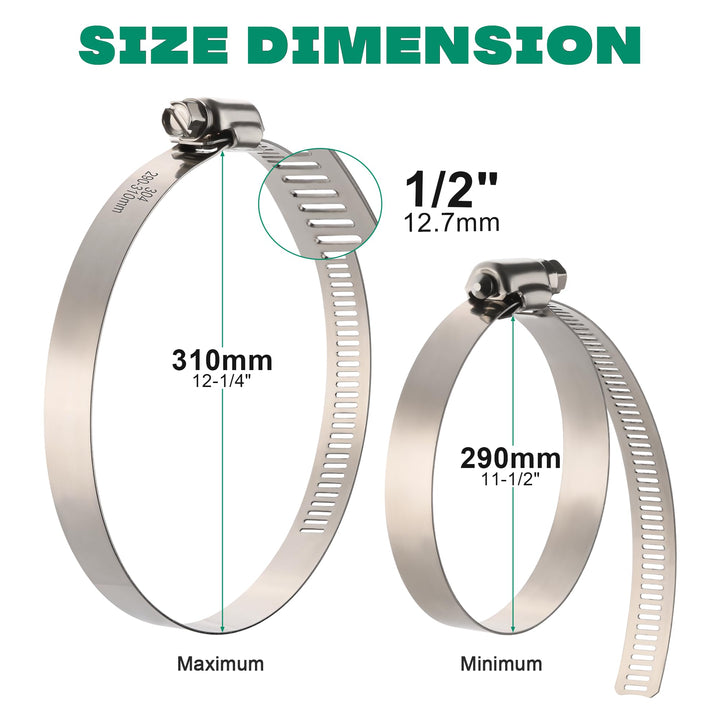
Large-Diameter Worm-Gear Hose Clamps
For measured larger hose assemblies where a worm-gear design and this product range have been separately confirmed appropriate. This product is not represented as 316 or marine-grade.
View Large Clamp Ranges
Leave a comment