

Can You Reuse PEX Fittings After Removing Crimp Rings?
Yes, some PEX insert fittings can be reused after ring removal—but only when the fitting manufacturer permits it and the part remains undamaged. Removing the ring successfully does not prove that the fitting, old ring, and original tubing end can all go back into service.
SharkBite and Apollo publish copper-ring removal methods intended to recover fittings. Those instructions support conditional reuse within their systems, not a promise that every PEX fitting is reusable. SharkBite
This guide focuses on barbed insert fittings used with copper crimp rings or compatible stainless-steel cinch clamps. Expansion and push-to-connect fittings require their own removal and reuse instructions.
Separate the Fitting, Ring, and Tubing Decisions
A barbed insert fitting has raised ridges that sit inside the tubing. The external ring or clamp secures the tubing around that insert. Recovering the insert does not restore the fastener that was cut or deformed during removal. SharkBite
| Component | Repair decision |
|---|---|
| Identifiable, undamaged insert fitting | Consider reuse only under its manufacturer’s instructions. |
| Removed copper crimp ring | Discard it; rebuild with a new compatible ring. |
| Removed stainless cinch clamp | Discard it; use a new compatible clamp. |
| Previously connected tubing end | Assess separately; plan for a fresh, sound end rather than assuming reuse. |
For example, an elbow removed while correcting a new installation is a different decision from an unidentified fitting recovered from a leaking wall cavity. The second situation leaves more questions about its condition and history. Do not treat both as reusable simply because their barbs look similar.
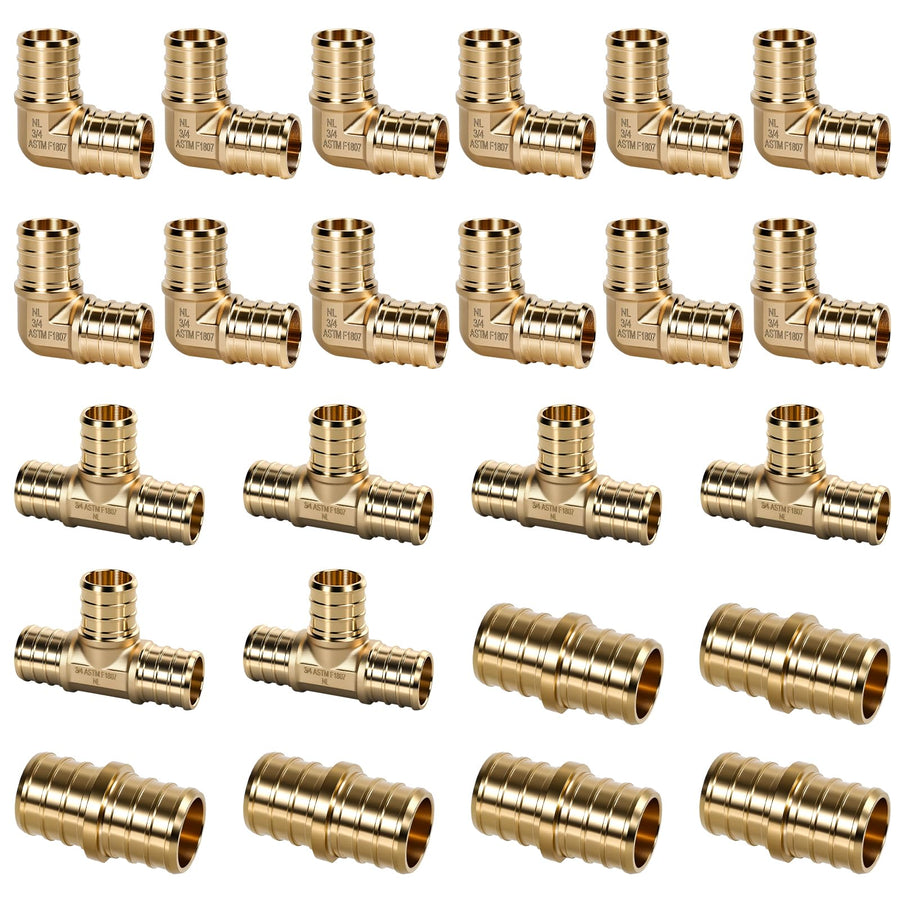
Ouru 3/4 Inch PEX Fittings Kit
Choose a documented-compatible replacement when the recovered fitting’s condition or reuse permission is uncertain. Confirm every connection size before ordering.
View Fitting Options →Identify the Connection Before Buying a Removal Tool
A continuous copper crimp ring and a stainless-steel clamp with a raised ear require different tools. Apollo lists separate removal tools for those fasteners. A generic product name such as “PEX crimper” is not enough to choose between them. Apollo
Ouru’s crimp tool versus clamp tool guide explains the distinction. The Ouru 2-in-1 Ratchet PEX tool is described for installing and removing compatible stainless-steel clamps on 3/8-inch through 1-inch PEX connections. It is not documented as a copper crimp-ring remover. Ourushop
For a copper-ring repair, obtain the appropriate copper-ring removal tool instead. Switching to stainless clamps during rebuilding is an option only when the tubing and fitting documentation permits that combination; it is not justified merely by owning a cinch tool.
Do not transfer this guidance to expansion rings, integrated press sleeves, or push-to-connect collars. Their construction and manufacturer restrictions differ. Ourushop
How to Remove PEX Crimp Rings Without Damaging Fittings
The objective is to recover an eligible fitting—not to preserve every piece of the old joint. No removal method guarantees that the fitting will survive.
Isolate and prepare the work area
Shut off the supply to the affected section, relieve pressure through an appropriate faucet or drain, and confirm isolation before cutting. Let hot-water components cool, and follow connected equipment instructions when shutting down or draining. Wear eye protection. If you cannot safely isolate the line, have a qualified plumber perform the repair. SharkBite
Check access before beginning. You need room to position the specified tool without levering against a neighboring pipe or fitting. If removal would leave insufficient sound tubing for reconnection, plan the replacement section first.
Before disassembly, photograph the ring position, fitting markings, and visible leak location. Keep the removed parts separated so a supplier can review what happened; do not mix them into an unused fitting assortment.
Follow the exact removal-tool instructions
Apollo’s copper-ring removal instructions describe cutting the tubing near the fitting, positioning the tool for the ring size, and using its designated jaws to cut and open the ring. The remaining tubing is then removed with the documented procedure. These are tool-specific operations, not instructions for using ordinary pliers. Apollo
SharkBite’s 23055 guide likewise uses a purpose-built tool and expressly excludes stainless pinch clamps and sleeves. Verify ring material, nominal size, and fitting material before applying a removal procedure. SharkBite
Do not improvise by sawing blindly toward the barbs, grinding the fitting, or using it as a pry point. Do not use a torch to free PEX. PPI warns against open-flame contact and unapproved chemical exposure in PEX systems. Plastic Pipe Institute
If removal requires force or tool contact outside the approved method, stop. Replacing the fitting is preferable to making its suitability impossible to establish.
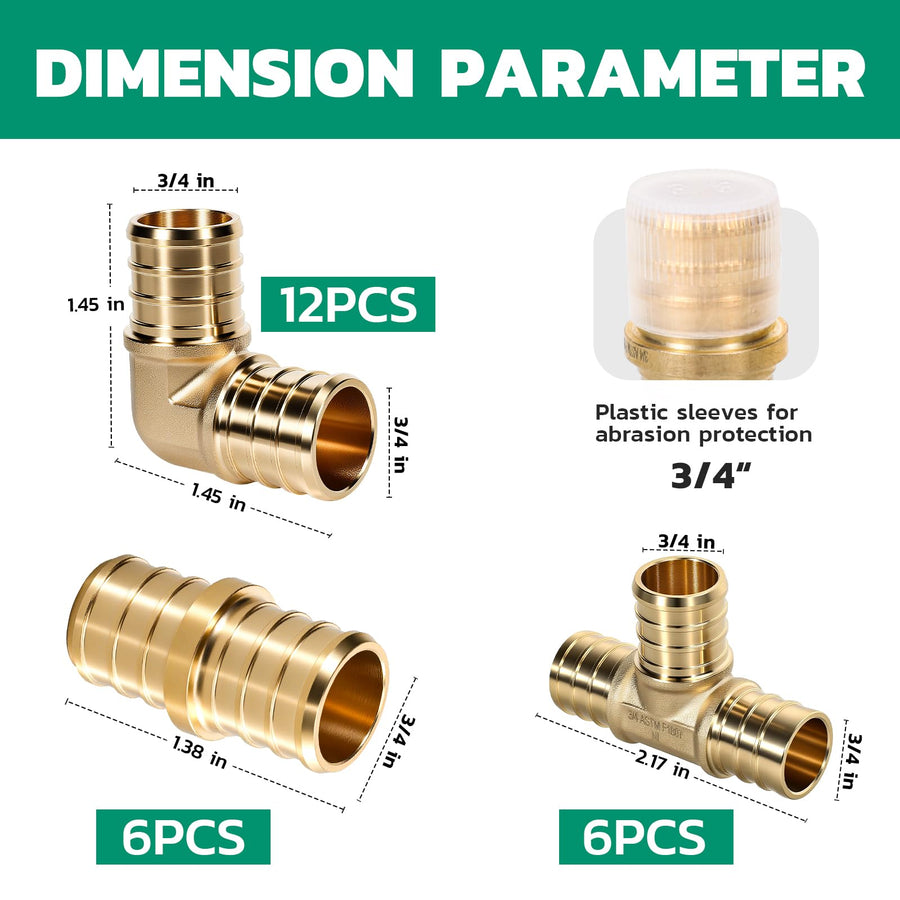
Ouru 3/4 Inch PEX Fittings Kit
Review the official fitting details and select the correct assortment. A removal tool cannot establish that an old fitting is suitable for reuse.
View Fitting Options →Inspecting Used PEX Fittings: What to Examine
Place the recovered fitting under good lighting. Remove loose debris only by methods compatible with the component. Rotate it to inspect every connection end and the internal opening. Do not examine only the side that is easiest to see.
Check the barbs and internal opening
Look for cutting marks, gouges, flattened ridges, and distortion. SharkBite’s 23055 instructions require rejecting a recovered fitting when the barbs have marks or the inside diameter is deformed. They do not offer a “small scratch is acceptable” allowance. SharkBite
Do not sand away a mark to make the part appear undamaged. That would not establish that its original geometry remains within specification. Without an applicable acceptance criterion, a photograph or fingertip check cannot approve a questionable surface.
Check the body and the fitting’s history
As a conservative screening rule, replace fittings with visible cracks, broken sections, or obvious deformation. Set aside parts with pitting, suspected chemical attack, or unexplained deterioration for manufacturer assessment; do not assume cleaning restores them.
For a tee, inspect all branches, not just the one from which the ring was removed. For a threaded adapter, inspect that end separately and verify its thread type and sealing requirements. A sound PEX barb does not excuse damaged threads.
If identification is missing or the exposure history is uncertain, choose a new, documented-compatible fitting rather than approving reuse by appearance. This is a risk-management recommendation, not a universal age limit.
When to Replace PEX Fittings Instead of Reusing Them
Use this decision table after removal. It is a screening aid, not a certification test.
| Finding | Next action |
|---|---|
| Removal mark on a barb or deformation of the bore | Replace; do not attempt to restore the profile. |
| Cracked, broken, or visibly distorted body | Replace and investigate what caused the damage. |
| Unknown identity, incompatible system, or no applicable reuse instructions | Do not reinstall until resolved; replacement is the conservative choice. |
| Fully identified part, permitted reuse, and no disqualifying damage | Follow the manufacturer’s reassembly and testing requirements. |
The rejection criteria for marked barbs and a deformed bore are specifically supported by SharkBite’s removal instructions. SharkBite
If the old connection leaked, locate the actual source before deciding what to save. Water at a joint does not, by itself, identify whether the problem was the fitting, tubing, fastener, or installation. Replacing only the ring is not a diagnosis.
For a connection that will be concealed, avoid treating uncertainty as a saving. Our recommendation is to replace a questionable fitting before closing the wall, while still completing the required inspection and testing. A new part does not excuse incorrect assembly.
Ouru 3/4 Inch PEX Fittings Kit
Replace questionable fittings rather than reshaping damaged barbs. Confirm tubing and fastening compatibility for your exact system.
View Fitting Options →Rebuild With Sound Tubing and the Correct Inspection Method
Plan to cut back to sound tubing or install a suitable replacement section. PPI advises against using tubing with cuts, gouges, cracks, chemical damage, or other defects and directs installers to the manufacturer’s damage-handling instructions. Plastic Pipe Institute
Use a fresh compatible ring or clamp, the specified insertion and positioning method, and the correct installation tool. Match nominal tubing size from the product documentation—not a measurement of the fitting’s bore. Do not combine components solely because each says “PEX.” Ourushop
For the documented SharkBite copper-crimp method, the completed ring is checked with the specified Go/No-Go gauge. Its stainless-clamp procedure uses a different connection check. Do not apply a copper-ring gauge rule to every clamp system. SharkBite
Complete the applicable pressure test and any required inspection before concealment. RWC’s installation guide specifically requires testing before pipe and fittings are hidden. Use your actual system’s procedure and local requirements; there is no universal test pressure or duration provided here. SharkBite
A hand pull or absence of an immediate drip does not establish that every requirement has been met. This article does not provide compressed-air testing instructions.
What to Confirm Before Ordering Ouru Replacement Fittings
When reviewing the Ouru 3/4-inch PEX fittings kit, confirm the selected assortment and each connection size. For a tee or reducing fitting, verify every port rather than relying on the kit name alone.
Ask for the approved tubing, fastening method, installation instructions, and the reuse policy for the exact fitting. A removal tool being able to free a fitting is not equivalent to a fitting-specific approval for another installation.
For drinking-water applications, verify the actual model’s applicable certification and local acceptance. NSF/ANSI/CAN 372 addresses lead content; NSF/ANSI/CAN 61 addresses health effects from materials contacting drinking water. A lead-content claim alone does not establish every requirement for potable-water service. NSF
Before buying, send Ouru support photos of the existing fitting, tubing markings, and ring type. Ask which replacement fitting and fastening components match your system. Include whether the repair will remain accessible or be concealed.
The useful answer to “can you reuse PEX fittings?” is conditional: recover only an eligible fitting, reject damage, replace the removed fastener, and rebuild on sound tubing using the specified method. If those conditions cannot be established, choose a documented-compatible replacement instead of guessing.
Ouru 3/4 Inch PEX Fittings Kit
Check each port, the selected assortment, and the applicable installation requirements with Ouru before ordering.
View Fitting Options →
Leave a comment