With over 10,000 orders
Skip to content
Introduction: Plumbing hose clamps are unassuming yet essential components in a wide range of applications – from home gardening and landscaping to automotive systems and commercial plumbing projects. These circular metal or plastic bands secure hoses over barbs or fittings, creating a tight seal that prevents fluid leaks. In fact, hose clamps are used in everything from agricultural irrigation lines to car engines, where they serve as gas line clamps, coolant hose fasteners, and even air intake hose clamp devices. By keeping hoses firmly attached, clamps ensure that water, fuel, or other fluids flow only where intended. A loose or poorly chosen clamp can lead to hoses slipping off or fluids leaking out, causing water waste, pressure loss, or even equipment failure. This is why selecting the right clamp and installing it properly is so important for both home and commercial plumbing scenarios.
For gardeners and irrigation system owners, using quality hose clamps is particularly critical. Outdoor hoses are exposed to varying pressures and weather conditions, from high midday water pressure to UV exposure and temperature swings. A secure clamp connection means your garden soaker hoses won’t pop off a fitting mid-way through watering, and your sprinkler system will deliver consistent pressure without springing leaks. On a larger scale, commercial irrigation setups (for farms, parks, or golf courses) rely on robust clamps to avoid downtime and water wastage. In the sections below, we’ll explore why secure hose connections matter in gardening and irrigation, look at the common types of hose clamps suited for outdoor use, and discuss how to choose the right size hose clamp for your needs. Along the way, we’ll highlight tips to ensure your hose clamps – whether a small 1″ pipe clamp or a hefty hose clamp 3" in diameter – are up to the task. Let’s dive in!

In gardening and irrigation, a secure hose connection is more than just a nice-to-have – it’s fundamental to the system’s efficiency and longevity. The most immediate reason is water conservation. Any leak, even a minor drip, can waste surprising amounts of water over time. According to industry experts, a high-quality connector or clamp that forms a leak-proof connection between hose and fitting will minimize water waste, whereas even a slow leak or drip can lose gallons of water during each irrigation cycle. In drought-prone areas or regions with water restrictions, preventing these leaks with proper clamps is not only eco-friendly but also cost-effective for your water bill.
Additionally, secure hose clamps maintain the water pressure and flow that your irrigation equipment requires. If a hose is loosely attached and seeping, you’ll experience reduced pressure at sprinklers or drip emitters – meaning uneven watering and subpar irrigation. A tightly clamped hose, on the other hand, channels the full water volume to where it’s needed. This consistent pressure ensures that sprinklers, drip lines, and other irrigation tools operate at their optimum levels without interruptions. In practical terms, your lawn gets watered evenly and your vegetable beds receive the right amount of drip irrigation because no water is being lost along the way.
There’s also an element of safety and convenience. Hoses that are not well-secured can suddenly pop off under pressure. Anyone who’s had a main garden hose blow off a spigot or a poly tube detach from a barbed fitting knows it’s a messy surprise – water spraying everywhere, mud forming, and possibly damage to plants or flooding of flowerbeds. By using the correct clamp (for instance, a trusty worm gear hose clamp 1 inch wide for a standard 3/4″ garden hose connection), you greatly reduce the chance of such blow-offs. The clamp physically prevents the hose from slipping off the fitting, even as internal water pressure rises or the hose expands with warm water. This means fewer emergency repairs and more peace of mind during your irrigation schedules.
Finally, secure connections help protect your equipment and plants in the long run. Leaks and sprays can lead to soil erosion around the area or unwanted wet spots that promote fungal diseases in plants. And if you’re using fertilizers or other additives in your watering system, a leak could inadvertently spray chemicals where they shouldn’t go. In summary, taking the time to clamp your hoses properly with quality hardware ensures your garden or irrigation system runs smoothly and efficiently. Don’t let a cheap or loose clamp undermine your hard work in the garden – it’s worth investing in reliable hose clamps now to avoid headaches later. (For example, Ouru’s durable stainless steel hose clamps create dependable, drip-tight seals so you can water your garden worry-free. Check out Ouru’s Hose Clamps Kit for a selection of high-quality clamps to keep your connections secure – shop now to prevent leaks before they start!)
Just as there are many pipe sizes and hose diameters in plumbing, there are also numerous types of hose clamps designed to secure those hoses. Choosing the right type can make a difference in ease of use and performance, especially in garden or irrigation applications. Here we’ll cover the most common hose clamp types you might encounter for outdoor use:
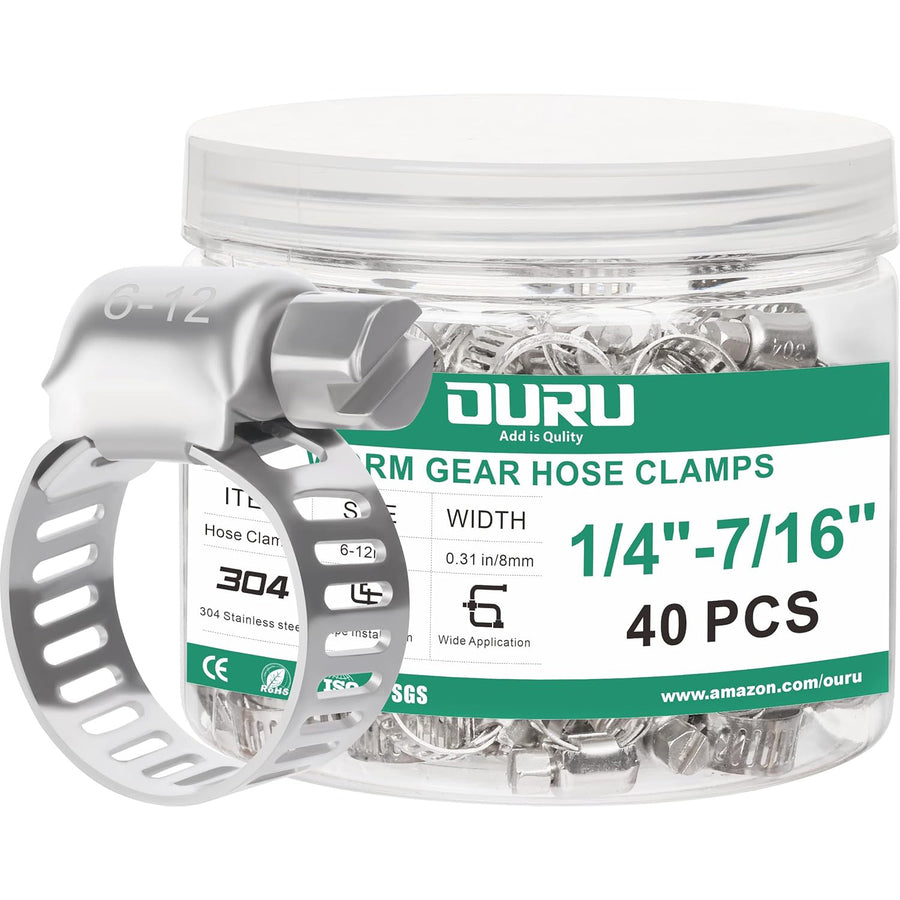
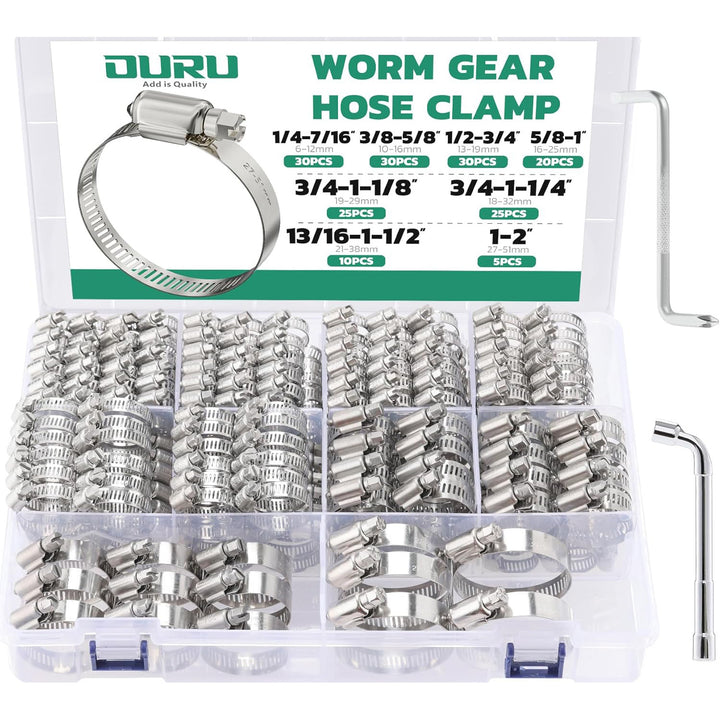
Worm Gear Hose Clamps (Screw Clamps): This is the classic hose clamp most people picture – a metal band (often stainless steel) with a screw that, when turned, tightens the band around the hose. Worm-drive clamps are popular for garden hoses, drip irrigation mainlines, and general plumbing because they are easy to install, reusable, and provide a strong, adjustable hold. By turning the screw, the band cinches down to form a leak-proof seal. These clamps come in various sizes (from tiny mini hose clamps for small tubes up to large 4″ or bigger bands for large hoses) and are typically made of galvanized or stainless steel for corrosion resistance. For most home irrigation needs, a worm gear clamp is the go-to solution due to its versatility. (Ouru’s Hose Clamps Kit includes robust worm gear clamps in multiple sizes, so you’ll always have the right one on hand.)
Spring Clamps (Constant-Tension Clamps): Often made of spring steel, these clamps apply continuous tension and are commonly used in automotive contexts (like radiator hoses). They don’t have a screw; instead, you squeeze them to expand and slip them over a hose, and they clamp down when released. In garden irrigation, spring clamps are less common but might appear on certain equipment or pre-assembled hose kits because they automatically adjust with temperature changes. They are convenient for quick installations but can be harder to remove or adjust without the right pinch clamp pliers. If your irrigation system came with spring-style clips on a hose, it’s a sign that connection was meant to stay put long-term. For most DIY gardeners, if a spring clamp fails or is hard to reuse, it’s often replaced with an easier worm gear clamp.
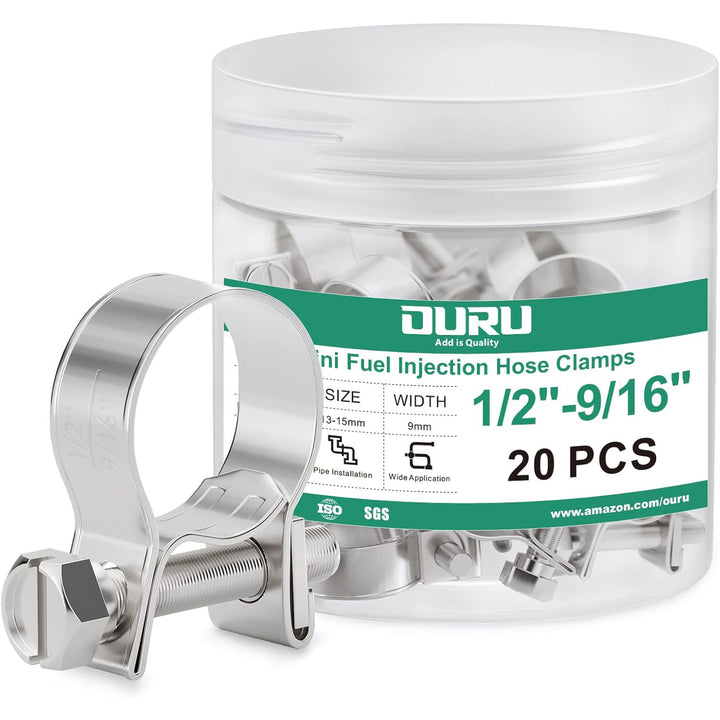
Ear Clamps (O-Clamps): Ear clamps are metal rings that have a small “ear” or tang which you crimp using special pliers. Common in permanent plumbing connections (like PEX tubing or some drip irrigation fittings), ear clamps create a very tight seal but are single-use – once crimped in place, they are not meant to be removed except by cutting. These are ideal when you want a low-profile clamp that won’t loosen (for instance, on underground irrigation lines or sprinkler system fittings). Their miniature hose clamps form factor makes them great for small diameter tubing. However, you’ll need the matching pinch clamp tool to install them properly. If you plan a lot of drip irrigation work, you might encounter ear clamps for securing 1/2″ poly tubing onto barbed connectors.
T-Bolt Clamps (Heavy-Duty Clamps): T-bolt hose clamps are designed for large diameter hoses or high-pressure applications – think of industrial irrigation hoses, fire hoses, or turbocharger hoses in engines. They feature a bolt and nut (forming a “T” shape when tightened) that can apply a very strong, uniform clamping force. In a garden context, you might use a T-bolt clamp if you have a high-pressure pump or a large hose (2″ diameter or more) that needs extra security. They are often made of heavy-duty stainless steel and can maintain a leak-proof hold even under significant vibration or pressure. For example, connecting a flexible pond hose or a high-output sprinkler system to a pump might call for a T-bolt clamp to ensure the hose doesn’t blow off. These clamps are a bit more cumbersome (requiring a wrench to tighten the nut) but they shine in demanding situations. (Ouru offers heavy-duty stainless steel hose clamps in kit form as well – perfect for those larger-diameter needs or extreme conditions where standard clamps might not suffice. Shop Now for Ouru’s heavy-duty options.)
Plastic Hose Clamps (Ratchet Clamps): In some low-pressure irrigation systems (such as drip irrigation for flowerbeds or greenhouses), you’ll find plastic ratchet-style clamps. These clamps are made of durable plastic (often nylon or ABS) and have a ratcheting mechanism that locks the clamp tighter when you press it closed. They are immune to rust and are quite handy for small 1/4″ or 1/2″ poly tubing connections in drip systems. The advantage is they install quickly by hand and won’t corrode in moist soil. However, plastic clamps cannot handle high pressure; they might loosen in hot weather or under strain, so they’re best reserved for gentle flows. If you have a 1 inch hose clamp need on a main garden hose, plastic would not be appropriate – a metal clamp is far superior for that task. Plastic clamps are a niche solution, but worth mentioning for completeness.
Wire Clamps: A less common variety, wire clamps consist of a piece of thick wire formed into a loop with a tightening screw (resembling a double-loop). These were more common in older automotive and agricultural settings or on suction lines with corrugated (ribbed) hoses. They tend not to distribute pressure as evenly as band clamps and can dig into softer hose material, so you won’t often see them in a standard garden hose setup. Still, stainless wire hose clamps are sometimes used for certain pump hoses or in situations where a quick makeshift clamp is needed. Their simple design is easy to loosen or tighten, but as Monroe Engineering notes, wire clamps usually don’t last as long or hold as securely as other types. In modern irrigation, you’re unlikely to need these unless specified by a particular equipment.
It’s worth noting that in plumbing, the term “pipe clamp” can also refer to something entirely different: a bracket or clip that holds a pipe (often a rigid PVC or metal pipe) to a wall or support. Examples include insulated pipe clamps or pipe riser clamps that secure vertical pipes. These should not be confused with hose clamps – they don’t seal a connection, but merely support a pipe’s weight or position. In this article, we’re focused on hose clamps that actually tighten around a hose to seal it. For any hose clamp type you choose, material and quality are key. Outdoor and marine hose clamps should ideally be made of stainless steel to resist corrosion from rain, sprinklers, and in marine cases, saltwater. Lower-quality clamps may use plain steel screws that rust over time – leading to failure. Industry guidelines suggest using 304 stainless steel or better for outdoor and marine environments, with 316 stainless steel being the gold standard for marine hose clamps due to its superior corrosion resistance. In fact, all components of a true “marine-grade” clamp (band, screw, housing) should be non-magnetic 316 stainless to ensure longevity in harsh conditions.
For most garden irrigation purposes, stainless steel worm gear clamps are the preferred choice. They offer a blend of strength, adjustability, and rust resistance that suits year-round outdoor use – from hot sunny days to winter freezes. Galvanized (zinc-coated) steel clamps can work too, but once the zinc layer scratches or wears, they may rust. And as mentioned, plastic clamps have their place but generally only for low-strain connections. By selecting the appropriate type and material of clamp – be it a tiny #6 mini hose clamp for a small line or a beefy 6″ hose clamp for a large pipe – you’ll ensure a reliable connection. (Having a variety of clamp types and sizes on hand is easy with Ouru’s Hose Clamp Assortment Kit. This kit includes stainless steel worm-drive clamps in multiple diameters, covering everything from 1 inch hose clamps up to larger 3 inch hose clamps, so you’re equipped for any gardening or plumbing task. Be prepared and keep your connections tight – shop now to grab the Ouru hose clamp kit.)
Selecting the correct hose clamp size is just as important as choosing the type. A clamp that’s too small obviously won’t fit, but a clamp that’s too large won’t tighten properly either, potentially leaving a gap or loosening over time. Here are some tips to ensure you pick the perfect size clamp for your outdoor hoses:
Measure the Hose Outer Diameter: To find the right clamp, start by measuring the outside diameter (O.D.) of the hose while it’s installed on the barb or fitting you plan to secure. This is important – the hose will slightly expand over a fitting. Use a caliper or a flexible tape measure around the circumference (and then divide by π to get diameter) for accuracy. For example, a standard garden hose is usually around 3/4″ (0.75 inches or ~19 mm) in outside diameter when on the spigot. If you don’t have precise tools, measuring the circumference with a string and then calculating diameter works in a pinch.
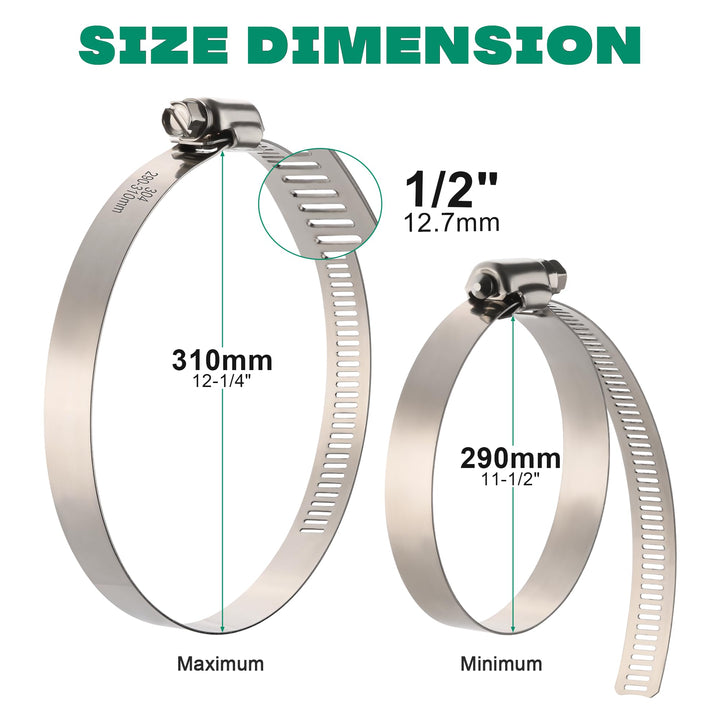
Match to the Clamp’s Range: Hose clamps are typically labeled with a size range (minimum to maximum diameter they can tighten to). Choose a clamp where your hose’s O.D. falls roughly in the middle of that range for optimal tightening. If your hose is 20 mm (~0.79″) in diameter, a clamp with range 18–25 mm (roughly 3/4″ to 1″) would be ideal, so that you’re not at the extreme end of the clamp’s capacity. SAE sizes are often used for clamps; for instance, an SAE #8 clamp might cover about 7/16″ to 1″ diameter, while an SAE #40 clamp covers about 2″ to 3″ diameter. Manufacturers usually provide size charts to help convert these numbers to actual measurements. (Many of the Ouru hose clamps come with clearly marked size ranges, making it easy to pick the right one.)
Common Outdoor Hose Sizes: Be aware of standard hose sizes to guide your choice. A typical home garden hose (5/8″ or 3/4″ inner diameter) has an outer diameter around 1″ or a bit less; these often use clamps in the #12 to #16 range. Smaller 1/2″ drip irrigation tubing might only need a mini clamp (like SAE #6 or #4). On the other end, if you’re securing something like a pool pump hose or a large discharge hose of 2″ or more, you’ll need a much larger clamp (SAE #36, #40, etc., which correspond to multi-inch diameters). Clamps exist for very large diameters – you can even find 8 inch hose clamps or bigger for industrial hoses or ducts. In those cases, often heavy-duty hose clamps (stainless steel) are used to provide the necessary strength. It’s reassuring to know that whether it’s a small 1/4″ line or a big 8″ hose, there’s a clamp out there for it!
Consider Hose and Clamp Material: While sizing, also take note of the materials. For outdoor use, as mentioned, stainless steel is highly recommended. If you have a black pipe or PVC pipe in your irrigation setup that needs clamping (say, coupling a hose to a PVC outlet), make sure the clamp can tighten enough to seal against that rigid surface without deforming it. An insulated pipe clamp (a different device used to cushion pipes) won’t seal a hose; ensure you’re indeed selecting a hose clamp of the right size and not a support clamp. For very soft hoses (like silicone or vinyl hoses often used in hydroponics), wider band clamps or dual clamps might be needed to spread out the pressure and avoid cutting into the hose.
Avoid Over-Tightening or Under-Tightening: Once you have the correct size clamp, install it carefully. A properly sized clamp will seal with only moderate torque. If you find yourself cranking a clamp with all your might to stop a leak, it might be the wrong size or already bottomed out (fully tightened). Using the wrong size can also lead to deforming the clamp or the fitting. Remember, if a clamp is too large or too small it will not provide a secure seal. When in doubt, size up your clamp kit – having a range from small to large ensures you won’t be tempted to use a clamp outside of its effective size range.
By taking these steps, you’ll ensure each hose clamp is a perfect fit for the job. There’s nothing more satisfying for a gardener or plumber than seeing a dry, drip-free connection after everything is tightened down. And if you maintain your system (occasionally checking clamps for snugness at the start of each season), a well-chosen clamp can last for years.
One handy strategy is to keep an assortment of various clamp sizes available, especially if you frequently work on different projects. A plastic box with a selection of hose clamps 1″, 2″, 3″, 4″ and so on (or their metric equivalents) can be a lifesaver when something unexpected needs fixing. (Ouru’s Hose Clamps Silver Color Kit is perfect in this regard – it contains a range of clamp sizes from 30-70mm up to 72-96mm and beyond, covering common garden hose and pipe diameters. With this kit, you can tackle almost any connection, from a small repair on a 1/2″ line to securing a large 2″ hose on a pump. Be ready for any plumbing or irrigation task – shop now and add this versatile clamp kit to your toolbox!)
In both home gardening and commercial plumbing, hose clamps are the unsung heroes that keep things flowing smoothly. By securing hose connections firmly, the right clamp prevents leaks, preserves water pressure, and protects your equipment and plants. We’ve seen how important clamp choice is for gardening and irrigation: a reliable clamp means fewer wasted gallons and healthier plants thanks to consistent watering. We also explored various clamp types – from everyday worm gear clamps to heavy-duty T-bolts – and highlighted how to pick the correct size so that your clamp fits like a glove. Remember, a clamp should be snug but not strained, and made of a material that will endure the outdoor elements (stainless steel being a top choice for longevity).
Whether you’re fixing a leaky sprinkler line or outfitting a large irrigation project, investing in quality clamps pays off in peace of mind. No one wants to find a puddle in the yard because a cheap clamp gave out! By following the guidance in this blog, you can confidently choose and use hose clamps – be it a tiny clamp for a drip line or a 3in hose clamp for a bigger hose – to secure your connections. Your reward will be an efficient, leak-free irrigation system that conserves water and saves you from troubleshooting headaches.
Ouru is proud to offer a range of dependable plumbing hose clamps to support all your home and commercial needs. With Ouru’s clamps, you get durability, corrosion resistance, and trusted performance where it counts. Don’t let a weak link undermine your watering efforts – upgrade to quality clamps and see the difference in your system’s reliability. Check out Ouru’s hose clamp collection (like the featured kit) to find the perfect clamps for your next project
{"one"=>"Select 2 or 3 items to compare", "other"=>"{{ count }} of 3 items selected"}
Leave a comment