With over 10,000 orders
Skip to content
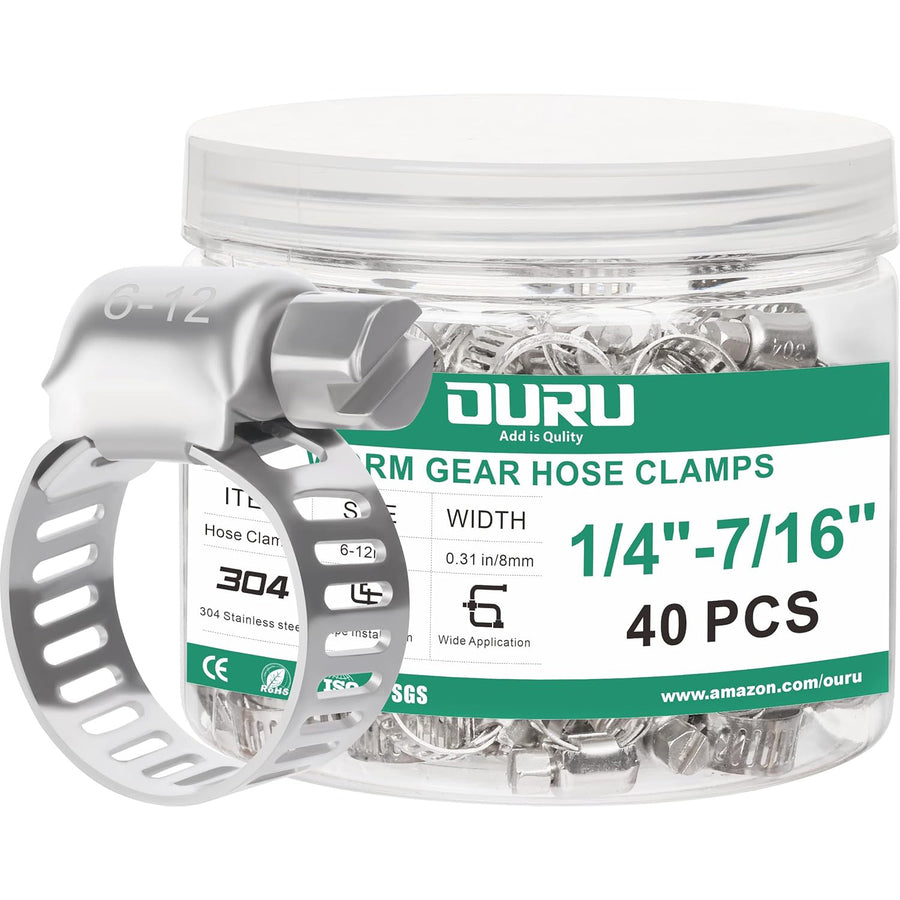
Having a loose hose clamp can be a real headache for any DIYer or homeowner. That little metal clamp is supposed to keep your hose tightly sealed on a pipe or fitting, but if it backs off or loses tension, you’ll end up with leaks, reduced performance, or even damage to your equipment. The good news is that fixing a loose hose clamp is usually straightforward – and with the right approach (and the right clamp), you can restore a secure seal in minutes. In this Ouru DIY guide, we’ll dive into why hose clamps get loose in the first place, how to quickly diagnose whether the issue is the clamp, the hose, or the fitting, and then walk through step-by-step how to re-tighten a loose hose clamp effectively. By the end, you’ll know how to prevent future leaks and ensure your hoses stay put. (Pro tip: using a quality stainless steel pipe clamp from a reliable kit can save you a lot of trouble down the line, as we’ll highlight throughout this guide – Ouru’s Stainless Steel Hose Clamp Kit is one such handy solution for various pipe sizes.)
Hose clamps might seem simple, but they face a lot of stress in everyday use. Understanding why hose clamps get loose can help you prevent problems and choose the right clamps for the job. Here are the most common reasons a clamp can lose its grip:
Vibration and “Walking” Screws: In dynamic environments (like a running engine or pump), continuous vibration can cause the clamp’s tightening mechanism to gradually unwind or “walk back”. Essentially, the screw threads on a worm-drive clamp may turn looser over time due to constant shaking. This gradual reduction in clamping force leads to a loose clamp and a compromised seal. If you have equipment that vibrates a lot (e.g. engines, compressors, heavy machinery), this is a likely culprit. Using clamps designed for vibration resistance or adding thread-lockers can help, but ultimately a sturdy stainless steel worm gear clamp from a reputable brand will hold better under stress. (Tip: Ouru’s stainless clamps are designed with precise threads and solid steel bands that resist loosening under vibration, giving DIYers peace of mind in high-vibration applications.)

Thermal Expansion and Contraction: Temperature fluctuations can make a clamp lose tension. As a system heats up, metals and rubber expand; as it cools, they contract. Standard worm drive clamps don’t automatically adjust to these changes. Over time, the hose material may shrink or “creep” after repeated heating and cooling cycles, leaving the clamp looser than before. For example, a car’s radiator hose may seal tightly when hot, but after cooling overnight the rubber slightly contracts, and the once-snug clamp might feel a bit loose. This effect is well-known: heat causes expansion, cold causes contraction – and this cycling loosens clamps that aren’t designed to maintain constant tension. It’s one reason automotive and marine manufacturers often use spring clamps (constant-tension clamps) on coolant lines, as these exert continuous spring pressure as the hose expands or contracts. If you’re using plain stainless steel pipe clamps on something like a hot water line or engine hose, it’s wise to re-check their tightness after the system goes through a few heat cycles. (At the end of each use or season, give your clamps a quick inspection – or consider upgrading to constant-tension or heavy-duty stainless steel hose clamps for extreme temperature swings. Ouru’s clamp kit includes sizes suitable for everything from small heater hoses to large 4 inch hose clamps, so you can easily swap in a better-suited clamp if needed.)
Material Creep and Hose Wear: Even without large temperature swings, hoses can change over time. A rubber or silicone hose under constant pressure might slowly deform or flatten out underneath a clamp. This “creep” or taking a set can make the hose thinner under the clamp, so the clamp that was once tight is now loose. In fact, some experts note that often “the hose clamps don’t loosen, the hose creeps” or compresses, eventually squeezing out from under the clamp’s band if not re-tightened. Old hoses also harden and lose elasticity, which means they don’t “push back” against the clamp as much, leading to a looser fit. The result is the same: leaks. If you observe a leak around a clamp that hasn’t moved, the hose might be the issue – it could be time to trim the hose end or replace the hose. (Always use good-quality hoses and clamps together. A stainless steel clamp on a brittle, old hose won’t solve the problem – you may need a new hose, and then secure it with a fresh clamp from a quality kit like Ouru’s to ensure a tight seal.)
Improper Installation or Sizing Issues: A very common cause of loose clamps is simply using the wrong size or installing it incorrectly. If a clamp is too large for the hose, you might reach the end of its screw travel before it truly tightens – it feels tight, but in reality the band isn’t snug all around. Conversely, if it’s too small, you might not even get it on, or you force it and strip the threads. Using a clamp whose size range doesn’t match the hose/fitting diameter will result in a poor seal. For instance, trying to use one of those tiny mini hose clamps (meant for 1/4” or 1/2” tubes) on a 1 inch hose will obviously fail. But even less obvious mismatches cause trouble: imagine putting a clamp meant for a 2 inch hose on a hose that’s actually 1.75 inches on the fitting – you may tighten it down fully, but the clamp could be nearly out of travel, and any minor shrinkage will make it loose again. Over-tightening to compensate is dangerous; as one industry source explains, using an oversized hose on an undersized fitting (say a 12 mm hose on a 10 mm barb) forces you to over-tighten the clamp, which can cut into a soft hose and worsen the leak. Similarly, clamps positioned incorrectly (e.g. not centered over the fitting barb or too close to the hose end) might slip off or not seal evenly. Always follow best practices: choose the correct clamp size and position it just behind the barb or flared ridge of the fitting, ensuring the band sits flat and perpendicular to the hose. (Investing in an assorted hose clamp kit can help here – you’ll have various sizes on hand so you’re not tempted to “make do” with an almost-fitting clamp. The Ouru Hose Clamps Silver Color Kit [30–175 pcs] has multiple sizes of metal clamps for pipes, from small 1/2 inch clamps up to large 4 inch hose clamps, covering most DIY needs. This means you can always grab the right size stainless clamp so it tightens correctly, rather than over-tightening a wrong size. Secure connections start with the right clamp!)
Wear, Corrosion and Material Quality: Hose clamps live in sometimes harsh conditions – automotive clamps face road grime and salt, marine clamps face saltwater, and outdoor plumbing clamps see rain and weather. A cheap clamp made of plain steel can rust and weaken relatively quickly. As clamps corrode or the band gets pitted, they lose strength and tightness. A rusty screw may seize or not hold tension. Additionally, the clamp’s band can stretch slightly under high pressure or if made of lower-grade material, making it slack after some time. Using stainless steel clamps (preferably marine-grade 304 or 316 stainless steel for wet environments) greatly reduces corrosion issues – they are rust-resistant and maintain their integrity far longer. Even so, any clamp can wear out after years of service or repeated adjustments. It’s good practice to periodically inspect your clamps for any signs of rust, cracks, or loss of tension. If you spot problems, replace the clamp proactively. (High-quality stainless steel adjustable clamps like Ouru’s are built to resist rust and handle heavy-duty use. Inferior clamps are much more likely to become loose over time, whereas heavy-duty stainless steel hose clamps will hold up under pressure. Don’t skimp on quality when it comes to something as critical as preventing leaks – a durable stainless clamp is a small investment for big peace of mind.)
In summary, a combination of vibration, thermal effects, hose material changes, size mismatches, and clamp quality issues are usually behind a loose clamp. Understanding these factors is the first step in fixing the issue correctly. By addressing the root cause – whether that means changing how you install the clamp or upgrading to a better clamp – you’ll ensure the problem doesn’t keep recurring. (Knowing why it happened, you can fix it right. And often the right fix is a better clamp: a robust worm screw clamp made of stainless steel will handle vibrations, temperature swings, and moisture far better than a bargain-bin clamp. That’s why seasoned DIYers keep a set of quality clamps like the Ouru kit in their toolbox, so a loose clamp can be swapped out or tightened up fast, restoring confidence in the connection.)
When you discover a loose hose clamp or a leak at a clamped connection, it’s important to identify the true cause before just cranking down on the screw. Sometimes the clamp is at fault; other times, the underlying hose or fitting is the real problem. Here’s a quick DIY diagnosis checklist to figure out what needs fixing:
Inspect the Clamp Itself: Start by examining the hose clamp. Is the screw driver slot or hex head starting to strip out? Are the threads in good shape, or do they look worn? Check the band for cracks or obvious deformation. If it’s a worm gear clamp, note how far the band is threaded through the screw housing – is the clamp almost closed to its limit, or well within its range? A clamp that is nearly “out of travel” (fully tightened yet still loose on the hose) is likely too big for the job. If the clamp is broken, heavily corroded, or the screw doesn’t tighten smoothly, no amount of tweaking will save it – you’ll need to replace the clamp (preferably with a new stainless steel one). Also consider the clamp type: if you’re using a basic worm-drive clamp on a high-pressure or high-vibration application, it might be the wrong type of clamp for the task. For example, fuel injection lines or hydraulic lines often require special high-pressure fuel line clamps or crimped bands, and a standard hose clamp might repeatedly loosen or even slip off.
Examine the Hose Condition: If the clamp looks okay, turn your attention to the hose. A hose in poor condition can be the hidden cause of a “loose clamp” issue. Look for swelling, cracks, or hardness in the hose near the clamp area. If the hose is very old, the rubber may have become hard or slick, which makes it difficult for even a good clamp to bite and hold. Sometimes you’ll find the hose has a pinhole leak or groove under where the clamp sits, indicating the hose material was compromised (perhaps by over-tightening or age). A hose that’s too large for the fitting (or too small, stretched over a larger barb) can also cause clamp troubles – you might tighten properly, but if the hose-to-barb fit is sloppy, it may still leak or let the hose slip under the clamp. One clear sign is if you see leaks despite the clamp being tight: a leak usually means the hose isn’t seated properly on the fitting, the hose itself is damaged, or even the fitting barb might be out-of-round or undersized. If the hose was not pushed fully onto the fitting (past the barb or bead), the clamp could be compressing an area with no support, and the hose could be squeezing out. Make sure the hose end is in good shape and correctly installed. If not, you may need to trim the hose end or replace the hose entirely.
Check the Fitting or Port: Lastly, inspect the fitting (the pipe nipple, barb, or whatever the hose slides onto). If the fitting is damaged – say, a barb is bent or there’s corrosion/deposit build-up – it could prevent a proper seal. A very smooth pipe with no barb (common in some older plumbing fixes) can also be hard for a clamp to seal against; normally a ridge or barb helps lock the hose in place. Ensure the fitting is the correct size for the hose: if someone jammed a 5/8” hose onto a 1/2” pipe, that mismatch will be trouble no matter how tight the clamp.
After this quick diagnosis, you should know whether the loose connection is due to the clamp (needs tightening or replacement), the hose (needs repair or replacement), or the fitting (needs attention or a different clamp strategy). Often, it’s a combination – for example, an aging hose that has shrunk and a clamp that wasn’t periodically re-tightened. Address each factor: replace what’s faulty and reassemble correctly. This sets you up for success before you even apply your screwdriver.
Now that we’ve covered the causes and diagnostics, let’s get hands-on. In this section, we provide a step-by-step guide to re-tighten a loose hose clamp and secure your hose connection. We’ll assume you have a typical worm-drive clamp (the kind with a screw) since that’s most common for DIY fixes, but we’ll note a few tips for other types like spring clamps as well. Before starting, make sure the system you’re working on is turned off or depressurized (for safety, you don’t want fluid spraying out or a hot coolant burn). Gather a few basic tools: a flat-head screwdriver or nut driver (often 1/4” or 5/16” for automotive hose clamps), and your replacement clamp(s) if you suspect the old one is bad. Ready? Let’s fix that loose clamp!
1. Relieve Pressure and Access the Clamp: Ensure the equipment is off. If it’s a car radiator or similar, make sure it’s cool (opening a hot system is dangerous). For household plumbing, turn off the water or pump. This prevents accidents and lets you properly assess the leak. Locate the loose clamp – you might need to remove a cover or move other components to reach it. Wipe up any fluid around the area so you can work cleanly.
2. Select the Right Tool and Clamp: Identify the type of hose clamp you’re dealing with. For a worm-gear clamp, a screwdriver (flat-head or Phillips depending on the screw) or a small socket wrench will do. Pick a tool that fits the screw head snugly to avoid stripping it. If it’s a spring clamp (with two squeezing tabs), grab a pair of pliers or dedicated clamp pliers to compress it. If it’s an ear clamp (crimp type), you’ll actually have to cut it off and replace it, since those aren’t reusable by loosening – in that case, prepare a new worm-drive clamp of the correct size to replace it (for example, many automotive DIYers will replace factory crimp clamps with a worm screw clamp of equivalent size for easier future maintenance). Ensure you have the proper size clamp if replacement is needed: the new clamp should have a diameter range that comfortably covers the hose on the fitting (you generally want to be in the middle of a clamp’s range, not at the very max or min, for optimal tightening).
3. Re-position the Hose and Clamp (if needed): Before tightening, double-check that the hose is properly seated on the fitting. Push the hose fully onto the pipe or barb so it’s past the sealing ridge. The clamp should be placed about 1/4” to 1/2” from the end of the hose, which usually means just behind the barb or raised lip of the fitting. Make sure the clamp is square (perpendicular) to the hose – not angled. A crooked clamp can tighten unevenly and might pinch one side of the hose while leaving the other side loose. If the clamp was previously installed wrong (like half on the barb or too close to the hose end), now is the time to correct that. Simply loosen it enough to reposition as needed. On a spring clamp, you’d compress and move it; on a worm clamp, just back off the screw a bit to slide it. Also, ensure there’s no debris or dirt under the clamp or on the hose that could interfere with sealing (wipe it clean if necessary).
4. Tighten the Hose Clamp Gradually: Begin tightening the clamp screw slowly and evenly. For worm-gear clamps, turn the screwdriver or nut driver clockwise in small increments. A good technique is to give it a quarter-turn, then check the tension, then another quarter-turn, and so on. Watch the hose as you do this: you want the clamp to compress the hose just enough to make a seal. If you see the hose material starting to bulge significantly at the edges of the clamp or the clamp’s band beginning to cut into the hose surface, you are over-tightening. As a rule of thumb, once you feel the clamp getting snug (you’ll feel solid resistance on the screwdriver), you may give an additional 1/4 to 1/2 turn – but no more. It’s critical not to simply crank down as hard as possible; over-tightening can strip the clamp or damage the hose, ironically causing leaks or a hose failure. If you have a torque specification (some equipment manuals or clamp manufacturers provide one), try to use a torque wrench or driver to meet but not exceed it. In most DIY cases, careful feel is enough.
5. Test the Connection: Once you’ve tightened the clamp to a firm snugness (without overdoing it), it’s time to test. Slowly restore pressure or turn the system back on (for example, refill the coolant and start the engine, or turn the water supply on but not to full blast initially). Observe the clamped area closely. No drips or beads of fluid should appear around the hose end – if it stays dry, your fix is successful. If you do see a small leak, try giving the clamp a tiny additional turn (say 1/8 of a turn) to see if that stops it. If the leak persists even after a bit more tightening, do not keep cranking indefinitely; there’s an underlying issue if it still leaks. At that point, pause and investigate: the hose might have a crack or the clamp might still be wrong size/type for the pressure. Remember, excessive tightening usually makes things worse by deforming the hose or stripping the clamp. In a properly executed fix, a single clamp tightened correctly should seal the joint. Also, look to ensure the hose isn’t being forced off the fitting – the clamp should be holding it in place behind the barb.
6. Replace the Clamp if Needed: We’ve touched on this throughout, but it bears repeating as a step – if at any point during tightening the clamp felt weak, or you noticed rust, or the screw was skipping threads, stop and replace the clamp. A loose hose clamp fix is only reliable if the clamp itself is reliable. Fortunately, replacing a clamp is easy: unscrew the old one fully to loosen it (or cut it off if it’s an old crimped type or completely seized), then remove it. Take a new clamp of the proper size (e.g., if the old one was a “#8 hose clamp” size, use the same or a slightly larger if the old was undersized) and slip it over the hose. Install it in the same position and tighten as described above. New clamps, especially quality stainless ones, will typically bite better and turn smoother than old, corroded clamps. As one professional tip notes, sometimes the best solution to a loose clamp is simply a new clamp, especially if the current one is corroded or worn out. Stainless steel clamps are inexpensive, so it’s wise to err on the side of replacement if you have any doubt.
7. Preventative Tips (Keep it Tight): Now that your hose clamp is secured, consider some preventive maintenance so it doesn’t loosen again. If the application is prone to vibration, you might add a drop of medium-strength thread-locking compound on the clamp’s screw threads before final tightening – this can help prevent the screw from backing out due to vibration. Alternatively, double up clamps if there’s space (two smaller worm screw clamps can sometimes hold better than one on a short hose neck, common in marine or automotive fuel line practice). For high vibration or large diameter hoses, a T-bolt clamp or a clamp with a locknut can resist loosening much better. If temperature cycling is an issue, check the clamp after the first run-up to temperature and cooling; you may need to re-torque it once after the hose initially compresses, but after that it should hold. Regularly inspect your hose clamps as part of your maintenance routine – a quick glance for leaks or a gentle wiggle of the hose to ensure it’s snug can catch a loosening clamp before it causes trouble. By being proactive, you can avoid repeat scenarios of loose clamps.
Conclusion: Fixing a loose hose clamp is a fairly simple task, but it’s important to do it right and address the underlying cause. We started by understanding why clamps loosen – from vibrations shaking screws loose, to temperature swings causing expansion/contraction, to material wear and using the wrong size clamp. By diagnosing whether the clamp, hose, or fitting was to blame, you can take the correct action – be it tightening, repositioning, or replacing parts. Following the step-by-step guide, you should now have a securely tightened hose clamp and a leak-free connection. Always remember not to over-tighten (which can damage hoses) but tighten evenly and adequately to get a good seal.
In the end, the key to avoiding loose clamps in the future is good equipment and maintenance. Use high-quality, corrosion-resistant stainless steel pipe clamps (they maintain their grip longer and won’t rust or weaken easily), and make sure to select the right size and type for each job. If you frequently work on projects with hoses, consider investing in a comprehensive clamp kit.
References:
{"one"=>"Select 2 or 3 items to compare", "other"=>"{{ count }} of 3 items selected"}
Leave a comment