


Secure Hose Connection
Provides firm clamping pressure to keep the hose securely attached
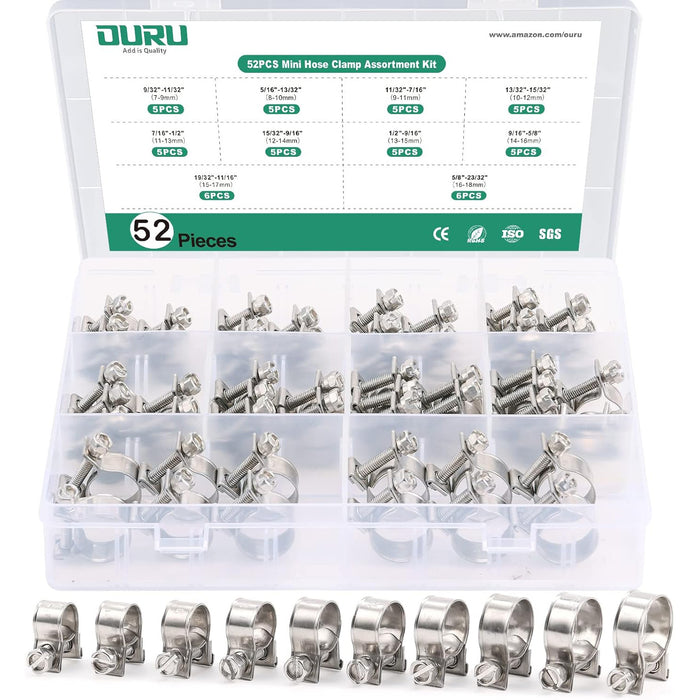

 Fuel Line Hose Clamp
The mini fuel injection clamps are packed in a strong box that is less likely to be damaged and easy to store and carry. Each small hose clamps is marked with inches for your convenience
The mini heavy duty hose clamps are made of high quality 304 stainless steel(Includes screws and nuts). They have excellent rust resistance and outstanding oxidation resistance, ensure long-lasting use for outdoor
Sturdy Steel Straps ensures no breakage during tightening. The surface of mini fuel hose clamp is smooth and burr-free, which can prevent the clamp from cutting off the hose
This fuel hose clamp has 360° sealing construction can effectively solve the problem of air or liquid leakage from the hose and no need to worry about deforming or stripping out after tightening. Easy to use,just need use a screwdriver to adjust the size
This small high pressure hose clamps fit for air hose, water pipe, fuel hose, silicone hose, etc. Widely used in diesel petrol pipe, home use, auto repair, marine, plumbing, agriculture, industrial and so on

Provides firm clamping pressure to keep the hose securely attached

All-stainless construction provides high strength, corrosion resistance, and reliable outdoor durability.

The sturdy steel band resists breakage, while smooth edges help protect hoses from cuts and damage.


Is the water pipe leaking?

STEP 1 — Connect the Hose

STEP 2 — Tighten the Clamp

STEP 4 — Test the Connection

These are better than the clip-clamps that you pinch with plyers. The gas was leaking from my lawn mower and I was going through gas fairly quickly. With these, my mower is no longer leaking. They have such a great grip. I used a big flathead and it stripped the edges a little but I am sure it wouldn't get that much damage from using a socket.
Kit@n@

The husband is working on an old car. He is always needing little items of various sizes like hose clamps! This set is perfect. A nice variety of sizes to have on hand without making a trip to town to buy one or two. These are well made and are working perfectly. 20 in a set and a good value for the money! Good product to have in ones tool collection. Would recommend !
Juju

All around well built hose clamp. They are actually all 304 stainless and work great. Only caveat is that all have a shallow flathead slot and some of them are so shallow they’re practically unusable so you’ll have to have a 9/32 nut driver or socket handy to really torque them down.
WRH

These fuel injection clamps keep the fuel where it's supposed to be with no leaks. I used the 9/16 clamps on fuel line going to my carburetor. They are easy to tighten and loosen. I found that my screwdriver didn't slip out 1 time while tightening which always happens with normal gear clamps. 5 star. Get some if you do your own car repairs.
Mr help you
Not by itself. A fuel line hose clamp can secure compatible fuel hose over a barbed or beaded fitting only when that connection is approved for the fuel system. Do not clamp rubber hose onto a plain, cut-off hard line. The clamp cannot substitute for a correctly designed connection.
An AN 37° flare connection seals at its mating surfaces, not with an external hose clamp. An AN-to-hose-barb adapter is different: its hose side may accept a clamp when the specified hose and fitting instructions allow it.
Do not grind, drill, or heat a seized clamp near fuel or fuel vapor. Before using any hose clamp removal tool, the fuel system must be cooled, depressurized, and made safe according to the vehicle manufacturer's procedure. Work in a properly ventilated area with ignition sources controlled; choosing a hand tool alone does not eliminate the fire risk.
If the screw will not release with the correctly fitting tool, stop and have a qualified technician select a suitable removal method. Replace the damaged clamp and inspect the hose and fitting before reassembly.
Identify the clamp design first. The correct hose clamp removal method depends on whether it is a screw clamp, spring clamp, or crimped ear clamp—not simply how old it is. Crimped ear clamps require an appropriate removal tool; a clamp that has been cut off must be replaced.
After the fuel system has been made safe, release the clamp without levering against the tank connection or forcing the hose off. If access requires moving the tank, or the hose and fitting are deteriorated, have a qualified technician follow the vehicle’s removal procedure. Preserving an old hose is not worth damaging the tank fitting.
Inspect the whole connection rather than assuming the clamp only needs tightening. Fuel near a fuel hose clamp may indicate deterioration of the hose, clamp, or fuel line. Years of previous service do not establish that those components remain suitable for reuse. Replace parts showing aging or damage.
Once the system is safe, check the hose and fitting condition, then verify clamp size, position, and fastening condition. Do not start or operate the vehicle with an unresolved fuel leak; have the completed repair checked using the specified leak-test procedure.
Not as an improvised repair. A fuel injection hose clamp is appropriate only where the specified repair uses a compatible clamped hose connection. For a damaged quick-connect or nylon fuel line, use the correct replacement connector, line assembly, or an application-specific repair kit—not a generic hose-and-clamp substitute.
Confirm compatibility for the complete connection, including fuel type, working pressure, and temperature. A hose’s pressure rating does not automatically become the rating of a clamp-secured assembly, and “high pressure” in a product title is not sufficient evidence of suitability.
Replace the damaged hose or line assembly and eliminate the rubbing source. Replacing the hose without correcting its routing leaves the cause of the failure in place. Keep the replacement line clear of adjacent clamp edges, moving components, and heat sources, following the vehicle’s routing requirements.
Use suitable fuel line mounting clamps or supports to maintain that clearance. These supports hold the line in position; they do not replace the clamp or fitting that seals the connection. Have the repair inspected and leak-tested before returning the vehicle to service.
Follow the hose clamp torque specs for the exact clamp and approved application—not hand feel or a fixed number of turns. Use the specified clamp style and size. Fuel-injection clamps commonly use smooth, non-perforated bands with rolled edges to provide sealing pressure while protecting the hose.
Stop and inspect the connection if tightening cuts into the hose or visibly distorts the clamp. A connection that looks secure is not a substitute for the specified installation and leak checks. If OURU’s installation torque is not listed for your selected clamp, request confirmation before using it on a fuel connection.
Each fuel line clamp is made from 304 stainless steel, including the band, screw, and nut. The corrosion-resistant construction provides durable fastening for compatible fuel hoses in automotive maintenance and outdoor equipment repairs.
Each fuel line hose clamp features a smooth, burr-free band that helps protect the hose surface from cuts during tightening. The 360° clamping design helps hold the hose securely around the fitting when correctly sized and installed.
Adjust these mini fuel line clamps with a screwdriver to fit within their specified size range. Inch markings make sizes easy to identify, while the included storage box keeps your fuel hose clamp kit organized and convenient to carry between jobs.
Use these fuel line clamps to secure compatible fuel hoses during automotive repairs, or suitably sized air and water hoses in household, agricultural, and workshop applications. Match the clamp to the hose, fitting, and operating requirements before installation.
{"one"=>"Select 2 or 3 items to compare", "other"=>"{{ count }} of 3 items selected"}