

What are the different types of hose clamps?
Hose clamp can describe two very different tools. One seals a hose to a fitting; the other supports a line so that it stays routed and protected. Only a sealing clamp is intended to help stop leakage at a barb, bead, or compatible fitting. A support clamp, such as a cushioned P-clamp or pipe hanger, secures a run but does not seal a joint.
For tubing connections, start by identifying the clamping mechanism. The main families are screw-driven clamps, spring or constant-tension clamps, and crimp or ear clamps. Then match the design, material, range, fitting, and installation method to the actual connection.
Main hose clamp families — clamps for tubing
Screw-driven clamps use a screw to pull an adjustable band tighter. Worm-drive clamps are the most familiar example. Spring and constant-tension clamps use spring force to accommodate some thermal movement, but are only appropriate when the hose or equipment specifies that type. Crimp and ear clamps are compressed with a dedicated tool and are commonly replaced after removal.
Keep sealing and support hardware separate. Pipe riser clamps, insulated pipe clamps, cable clamps, and many hydraulic line supports are for routing, vibration control, or mounting. Choose a product intended to seal the installed hose-and-fitting connection rather than simply hold the line in place.
Core Types — clamps for tubing
Worm-drive clamps
Turn the screw and the band tightens around the hose. This adjustable design is useful only when a worm-drive clamp is suitable for the connection and the listed range fits the hose outside diameter over the fitting. Check that the band sits squarely behind the fitting bead or barb, and avoid over-tightening soft hose.
Spring and constant-tension clamps
These clamps apply spring force rather than a screw-adjusted band. They can be useful where the original hose or equipment calls for a compatible spring design, especially where temperature changes matter. Do not replace an equipment-specified spring clamp with a different mechanism solely because it looks more adjustable.
Ear clamps
Stepless single-ear clamps are crimped closed with the correct ear-clamp tool. They are not screw-adjustable, and removal normally means replacement. Confirm the specified clamp size, fitting compatibility, and tool access before closing the ear.
 |
SINGLE-EAR DESIGN OURU Stainless Steel Stepless Single-Ear Clamps304 stainless steel single-ear clamps for compatible hose-and-fitting connections. Select the specified size and use the correct ear-clamp installation tool; these are not screw-adjustable clamps. View Single-Ear Clamp Sizes |
T-bolt and specialty clamps
T-bolt clamps use a bolt-style closure and are selected where the equipment and installed range specifically require that design. Other variations, including lined bands or specialty clamps, address particular hose materials, access limits, or installation requirements. A clamp’s name alone does not establish pressure, temperature, or corrosion suitability.
Materials, band styles & corrosion — clamps for tubing
Materials matter across the entire assembly: band, housing, screw, and any liner or spring. Stainless steel can offer corrosion resistance, but the grade and construction must be verified for the environment. Do not assume that a stainless band means every component has the same material or that it is appropriate for marine, chemical, or continuously wet exposure.
Band construction also affects the hose. Slotted, embossed, lined, and solid-band designs can contact softer hose differently. Choose the mechanism and band style specified for the connection, then inspect for sharp edges, corrosion, damaged threads, distortion, and hose damage before installation.
Conclusion
Choose a clamp by the job it must perform: seal a compatible hose-and-fitting connection, not support a line. Identify the original mechanism, measure the hose outside diameter over the fitting, check the installation space, and follow equipment requirements. If the hose is cracked or the fitting is damaged, replacing the clamp alone will not solve the issue.
 |
T-BOLT REQUIREMENT OURU T-Bolt Hose ClampsFor connections that specifically require a T-bolt design. Check the currently listed clamp range, installation space, and equipment requirements before choosing; “heavy duty” alone does not establish system-pressure suitability. Check T-Bolt Specifications |
Sources referenced
For next steps, see How to Choose the Right Hose Clamp for Any Application for matching a clamp type to the working conditions, and measure the assembled hose diameter before selecting a range.
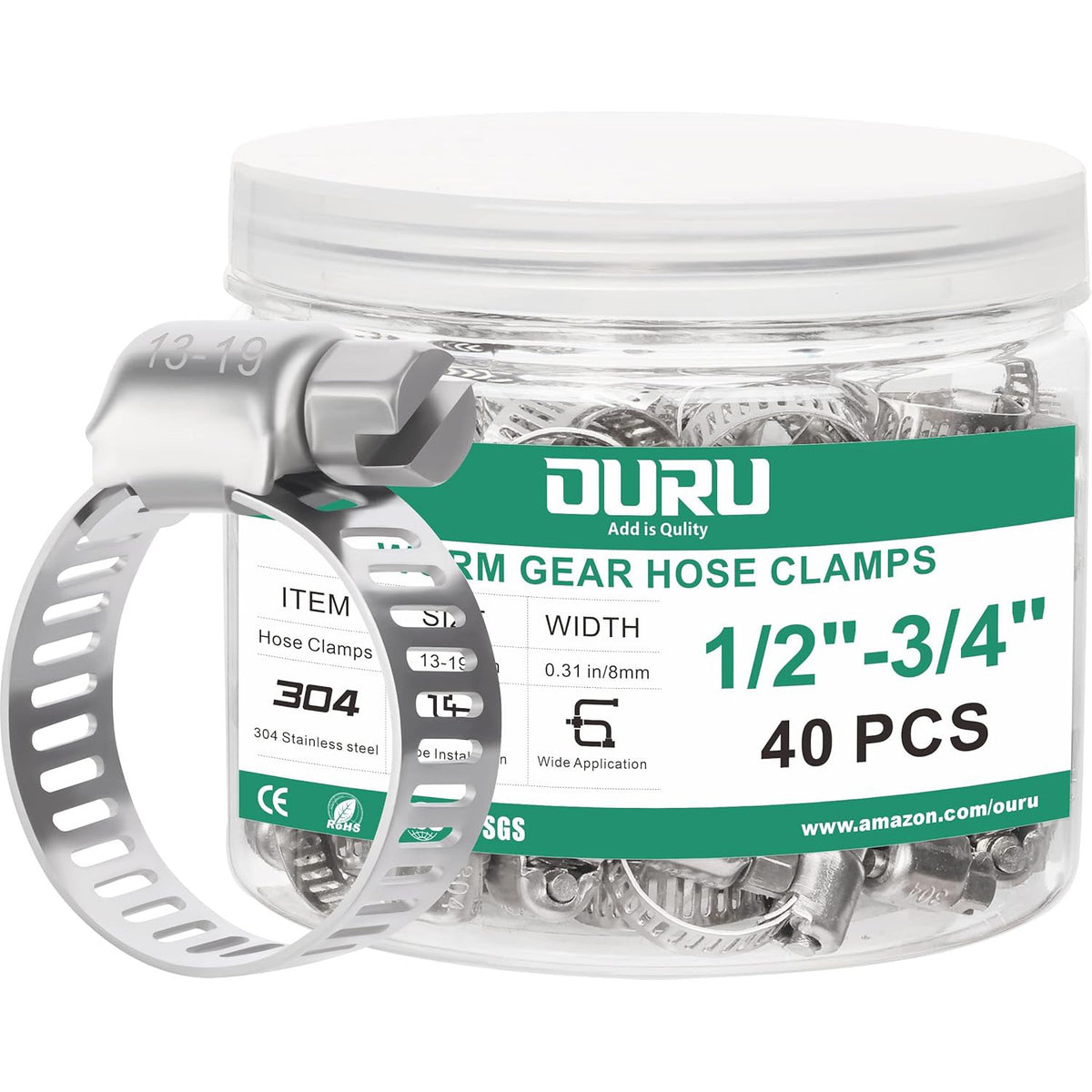 |
READY TO SELECT A RANGE? OURU Adjustable Worm-Gear Hose ClampsFor compatible worm-drive hose-and-fitting connections. Compare the listed clamping range with the assembled hose outside diameter before selecting a pack. View Worm-Gear Clamp Sizes |
Leave a comment