

How to Tighten a Hose Clamp: 4-Point Method for Leak-Free Seals
A leak-free hose connection is not finished when the screw feels tight. Work through these four checks in order: size and position, the matching tool and method, a damage-aware tightness check, then a leak and heat-cycle re-check.
Point 1 – Choose the Right Clamp Size and Position
Measure the assembled outside diameter of the hose and fitting, not the loose hose alone. For a worm-gear clamp, the selected range should place the screw housing in a useful part of its travel instead of at either end. Position the band squarely behind a barb ridge or bead, never on top of it, and keep it far enough from the hose end that the hose cannot bell outward.
Correct a misplaced band before tightening. If the existing clamp is undamaged, matches the range, and suits the clamp type, keep using it. Replace only worn hardware or a clamp whose range is wrong for this connection; ear clamps and other non-screw designs need their own specified method.
SIZE-MATCHED REPLACEMENT OPTIONS — FOR WORN OR OUT-OF-RANGE WORM-GEAR HARDWARE
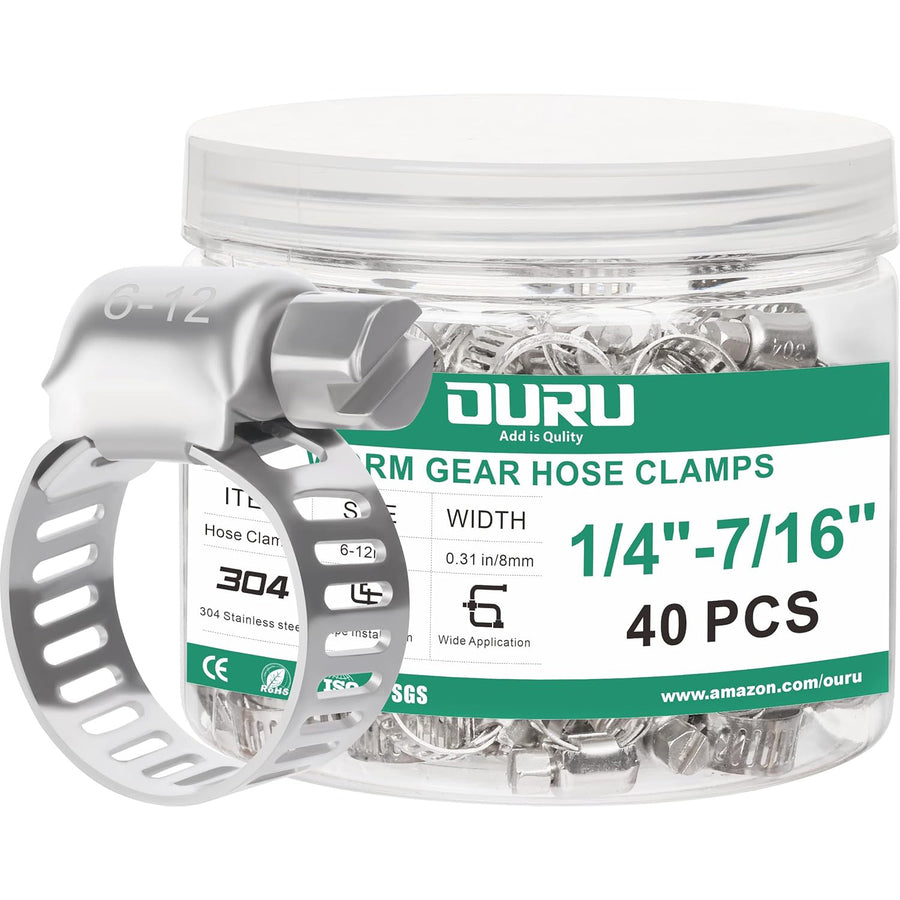
Size-Matched Worm-Gear Hose Clamps
304 stainless steel, screw-adjusted bands for a known single assembled diameter. Compare the selected range before installation.
Check Size Options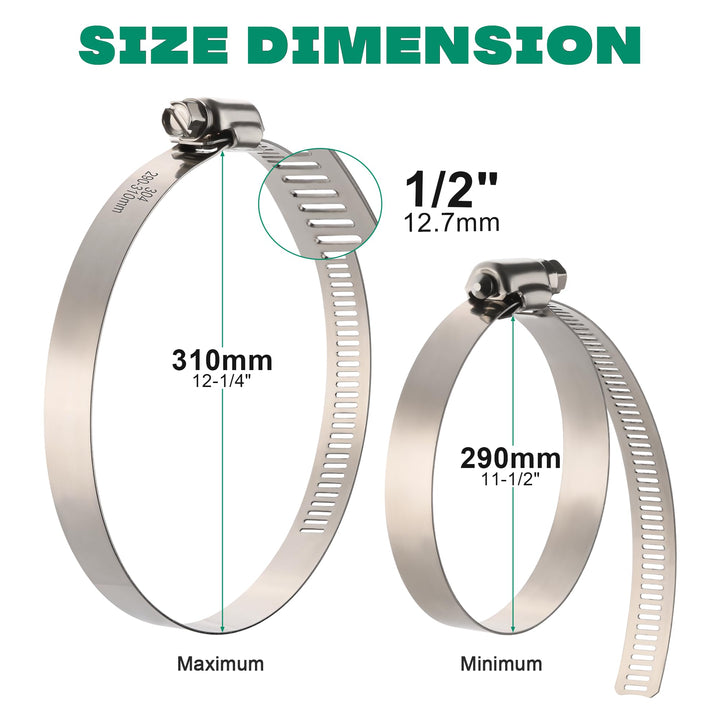
Large-Diameter Worm-Gear Clamps
Use this branch only when the measured assembled diameter exceeds the bottle option’s range. Select the finished range, not a guess from the article.
View Large Clamp RangesPoint 2 – Match the Tool and Tightening Method
Use a fully engaged nut driver, socket, or screwdriver that matches the actual worm-gear drive. Seat the hose, rotate the housing away from rub points, and tighten in small, even increments while checking that the band stays flat. Do not force a slipping tool, a binding screw, or a clamp that has reached the end of its adjustment range.
Spring-band, ear, T-bolt, and constant-torque clamps are not interchangeable with worm-gear hardware. Use the compatible tool and the manufacturer’s method for the exact clamp design. Do not treat another brand’s torque example as an OURU installation value.
Point 3 – Decide Whether It Is Tight Enough Without Damaging the Hose
A correct connection has even compression, a stable hose that does not turn on the fitting under a firm hand twist, and no seepage when service is restored. Stop if the hose bulges, deeply dimples, extrudes through slots, develops a cut, or becomes harder to seal as you tighten. Those signs point to the wrong size, clamp type, or hose condition—not a need for more force.
If the hose is swollen, split, soft, or cut, address the hose before replacing the clamp. If you see a bulge, cut marks, or a leak that worsens with more tightening, read Can you tighten a hose clamp too much? before making further adjustments.
Point 4 – Pressure-Test, Heat-Cycle, and Re-check
Restore service gradually when it is safe, wipe the joint dry, and check for movement or seepage. Re-check after the first normal operating or temperature cycle when the application calls for it. This separate final check catches relaxation, thermal cycling, and range mistakes that a stationary screw check can miss.
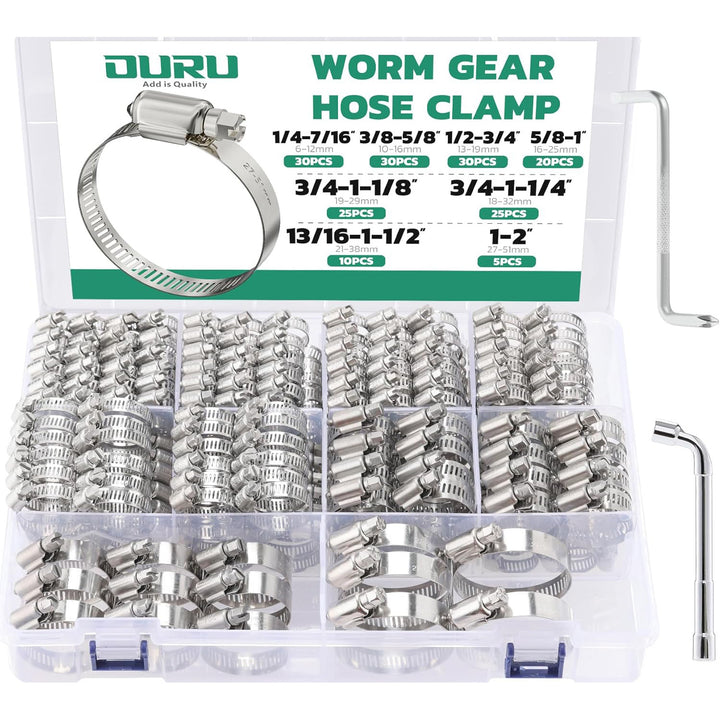
Once the current repair has passed its re-check, a multi-size kit can make sense only for planned work on several known hose diameters. Confirm the size bands and quantities before stocking it; it is not needed for one correct, serviceable clamp.
Four-Point Finish
Size and position first. Match the tool and clamp method second. Check for a stable seal without damage third. Then test, heat-cycle, and re-check. A correctly matched, undamaged clamp should remain in service; replacement is for a range or hardware problem, not a default step.
Leave a comment