

How to tighten a hose clamp?
A clamp that works in a dry workshop may not be appropriate on a boat. Choose a marine hose clamp from the connection’s location, failure consequences, material evidence, clamp structure, and installation requirements—not from a “marine-grade” label alone.
1. Start with the Boat Location and Consequence of Failure
Identify where the hose connection operates before selecting hardware. A protected freshwater drain, an exposed deck-wash line, a bilge connection, and a waterline-adjacent hose can face very different exposure, access, and failure consequences. Salt spray, trapped moisture, temperature changes, vibration, and limited inspection access all affect the maintenance plan.
For a critical connection—especially one where leakage could affect safety, buoyancy, propulsion, fuel handling, or electrical equipment—follow the vessel, engine, hose, fitting, and applicable marine-system requirements. A blog article is not a substitute for those specifications.
2. Compare 304, 316, and “All-Stainless” Construction
Stainless steel is not one uniform material category. 304 and 316 are different grades, and the clamp’s band, housing, screw, bolt, and liner may not all use the same material. In saltwater exposure, the material evidence for every corrosion-sensitive component matters—not only the band.
316 is often considered when additional chloride-corrosion resistance is required, but a product should be described as 316 only when the actual product documentation supports that claim. Do not infer 316 construction, marine suitability, UV performance, or salt-spray life from a generic product name or a photo.
3. “All-Stainless” vs “Stainless Band Only”
An all-stainless claim should refer to the relevant metallic components, including the band, housing, and tightening mechanism where applicable. A clamp with only a stainless band may still contain a different screw, housing, or fastener material that can become the limiting corrosion point. Read the product specification rather than relying on an anchor text or category label.
Do not link “316 marine-grade” wording to a spring-clamp assortment, a generic 304 worm-drive item, or another product whose material and size range have not been verified for the stated application. Correct the product match first; then use the product’s actual material, range, and connection information.
4. Match the Clamp Structure to the Connection
Choose the clamp mechanism required by the hose, fitting, and equipment documentation. Worm-gear clamps are screw-adjusted and must be matched to the assembled outside diameter. T-bolt clamps are used only where that specific structure and range are called for. Constant-tension clamps are selected when the connection is designed to accommodate temperature-related movement. Spring clamps should not be treated as interchangeable with a large marine worm-drive or T-bolt clamp merely because both are metal clamps.
Clamp construction by itself does not establish an operating-pressure rating, a marine approval, or compatibility with a particular hose system. Confirm the complete connection: hose material, fitting geometry, clamp range, environmental exposure, service load, and the equipment maker’s requirements.
5. Check Clearance, Position, and Whether Double Clamping Is Required
Measure the assembled hose outside diameter at the planned clamp location. Ensure the band sits on a supported portion of the fitting, clear of the hose end and any unsupported edge. Verify that the screw housing or bolt has enough clearance for installation and later inspection, and that the clamp will not rub against adjacent equipment during vibration.
Some marine installations specify two clamps, their orientation, or a particular spacing. Use double clamping only where the installation standard or equipment documentation requires it, and use two correctly matched clamps—not two unsuitable clamps as a workaround for the wrong size, damaged hose, or unsuitable fitting.
6. Install Carefully, Then Inspect for Corrosion and Sealing
Clean the fitting and hose, check for swelling, cracking, cuts, or hardened rubber, and replace damaged parts before tightening. Position the clamp squarely, use a tool that fits the actual fastener, and tighten gradually to the specified condition. Do not over-tighten in an attempt to compensate for an incorrect clamp range or a compromised hose.
After returning the system to service, inspect for leaks, hose deformation, band misalignment, loosened hardware, and early corrosion. Recheck after the first operating or temperature cycle when the system requirements call for it. Establish a recurring inspection interval that reflects the exposure and consequence of failure.
Understand the Materials Before Procurement
For a clear comparison of clamp materials and the limits of broad material labels, read Hose Clamp Materials Explained: Stainless Steel vs Other Types. Use that information alongside the actual product specification and the vessel’s connection requirements.
Key Takeaway
Do not purchase a clamp for a marine or saltwater connection until its actual material, construction, range, and intended use have been verified. No verified 316 all-stainless, marine T-bolt, or marine constant-tension product is presented as a marine-specific recommendation here. The product card below is limited to a 304 worm-gear option for applications where its material and range have been separately confirmed.
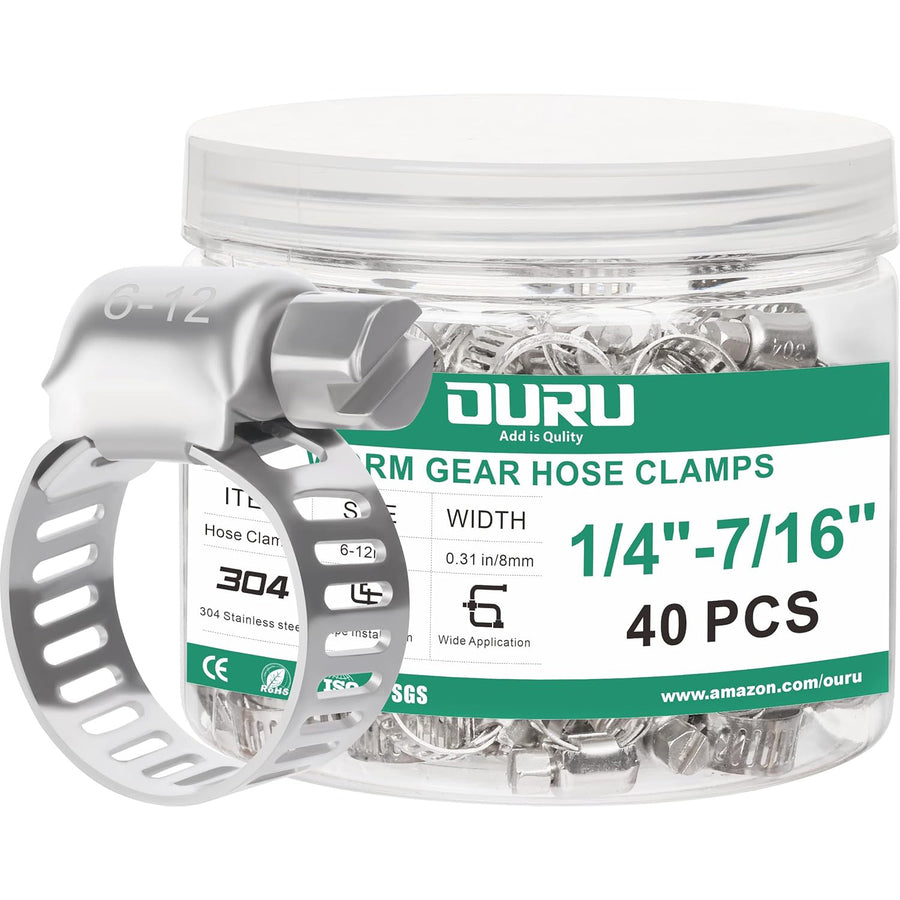
304 Stainless Steel Worm-Gear Hose Clamps
For size-matched hose connections where 304 stainless steel has been confirmed appropriate. Check the clamp range, full construction, and installation requirements. This product is not presented as 316 or marine-grade.
View Material & Size Details
Leave a comment