Skip to content
How to Choose the Right Hose Clamp for Any Application

How to Choose the Right Hose Clamp for Any Application

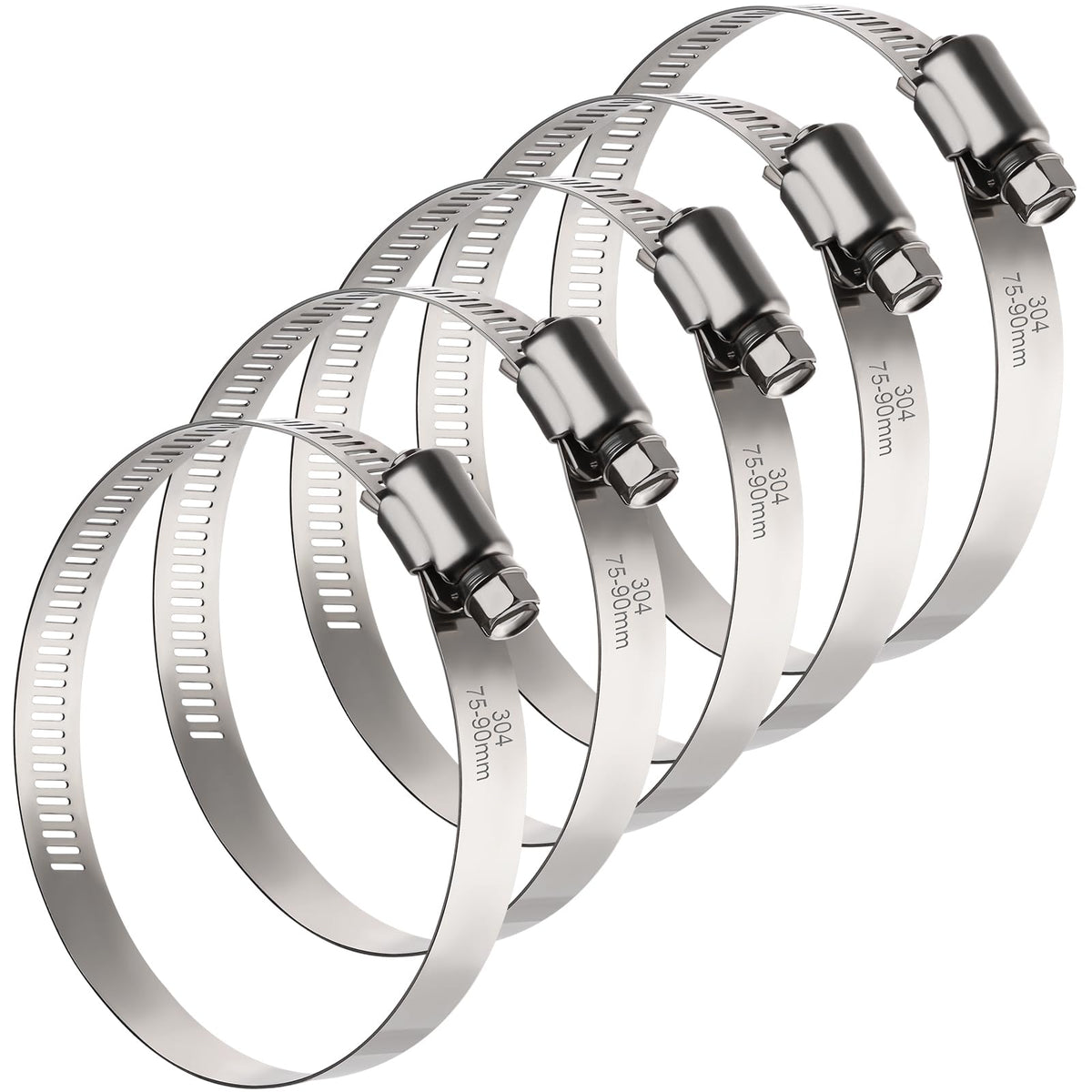
Why Choosing the Right Hose Clamp Matters for hose clamp 3"

A hose clamp looks simple, but the “right clamp” depends on what the system is doing: hot coolant expanding and contracting, fuel under pressure, air intake piping vibrating, or seawater trying to corrode everything in sight. That’s why standards bodies specify clamp performance for different applications—SAE J1508, for example, covers 32 types of clamps used on OEM coolant, fuel, oil, vacuum, and emission systems, which is a strong hint that “one clamp fits all” is a myth.

The most common clamp failures come from three mismatches: wrong size, wrong design, and wrong material. Wrong size often shows up as leaks on a mid-range connection like hose clamp 3", where the clamp bottoms out or never reaches proper compression; wrong design shows up when a standard worm clamp damages soft hose; and wrong material shows up when a “stainless-looking” clamp has a plated screw that rusts first and loses tension.

Beyond leaks, clamp choice can become a safety decision. Fuel odors, coolant loss, and vacuum leaks can lead to performance issues or hazards; in more demanding systems, clamp design is used specifically to control clamp force and reliability under vibration and thermal cycles. The easiest way to reduce that risk is to select clamps intentionally, not randomly.

A practical way to think about selection is: load + environment + hose material. High load (pressure and vibration) pushes you toward heavy-duty designs like T-bolt clamps; harsh environments push you toward 316 stainless and “all-stainless” construction; and soft hose materials push you toward non-perforated bands or designs that distribute force evenly. Build that decision habit once, and you’ll solve most “mystery leaks” before they start—especially if you’ve got the right Ouru sizes ready to go.

64 piece hose clamp kits in clear organizer case, multiple worm gear sizes for household water pipe maintenance

Types of Hose Clamps and Their Applications for hose clamp 3"

Worm gear clamps are the everyday workhorse: adjustable, reusable, and installed with common tools. BAND-IT highlights worm gear clamps with a smooth inside diameter that provides 360° contact, and notes they require no special tools beyond a screwdriver or nut driver—ideal for general repairs where you may move between a hose clamp 2 inch, a hose clamp 3", and a 4 inch hose clamp on different projects.

Within worm clamps, the band design matters. Non-perforated (embossed) worm clamps are specifically engineered to prevent hose damage; Ideal-Tridon explains that non-perforated bands help keep soft silicone hoses from shearing or extruding during installation and final torquing, improving seal stability. If you work with soft couplers like an air intake hose clamp setup, choosing the right worm clamp style can be more important than simply tightening harder.

Spring and constant-tension clamps are built for thermal cycling—when hoses expand/contract and relax over time. Bandtite describes constant tension clamps as helping prevent leaks caused by temperature changes or hose relaxation by maintaining a more consistent radial force as conditions change. These are common in automotive cooling and industrial systems where re-torquing is inconvenient; if you frequently service engines or heated circulation loops, keep replacement clamps in your Ouru kit so you can swap worn clamps immediately.

T-bolt clamps are the heavy-duty option for high load, high vibration, and larger diameters. NORMA Group notes T-bolt hose clamps are intended “where other hose clamps do not work,” and lists typical applications like air intake systems and charge-air hose connections—exactly the places where a standard worm clamp may slip or lose seal under boost. When your “standard” clamp starts failing on big connections (think 3–4 inches and up), it’s smart to keep heavy-duty stainless options available.

Ear clamps (Oetiker style) are designed for a tamper-resistant, uniform squeeze. Oetiker emphasizes StepLess® ear clamps provide uniform compression/surface pressure over 360° and feature burr-free strip edges to reduce the risk of damaging the parts being clamped. Ear clamps are popular on fixed assemblies and production-style builds where you want repeatable closure, but they require the correct tool and are typically not “adjust and reuse” like worm clamps—so it’s wise to keep versatile worm gear backups in your Ouru kit for field repairs.

For specialty needs, you’ll also see wire clamps stainless for certain hose geometries, lined clamps where hose protection is critical, and application-specific clamps (for example, fuel-injection styles). The takeaway is not to memorize every clamp on the market; it’s to match the clamp’s mechanical behavior (adjustable, constant-tension, high-load, uniform compression) to the job. When you keep a spread of common sizes like 1 inch hose clamps, 2 inch hose clamp, and 3in hose clamps from Ouru, you can make that match quickly.

Plastic case hose clamps kit with labeled compartments, multiple stainless diameters organized for pipe connections.

Materials Matter for hose clamp 3": Stainless Steel, Zinc, or Plated?

When people say “stainless clamp,” they often miss the most important detail: which stainless grade and whether the clamp is truly all-stainless (band + housing + screw) or only a stainless band paired with a plated screw. AFT Fasteners’ chart explicitly distinguishes combinations like stainless band/housing with a zinc-plated screw versus all-300 stainless and all-316 stainless constructions—because corrosion and torque behavior can vary by material set. If you want fewer surprises long-term, upgrade your replacements with Ouru stainless clamps and stop reusing mixed-metal leftovers.

For corrosion-prone environments (outdoor HVAC, coastal installs, washdown areas, and especially marine hose clamps needs), 316 stainless is commonly preferred because it contains molybdenum, improving corrosion performance. Ryerson summarizes the key difference as the presence of molybdenum in 316, which significantly enhances corrosion resistance and is associated with offshore/marine and coastal applications. If a joint is important and exposed, spend your budget on better material.

Metallurgy data backs up that principle: Outokumpu’s 316 datasheet notes that resistance to pitting and crevice corrosion can be improved by increasing chromium, molybdenum, and nitrogen, and that such grades provide better localized corrosion resistance than standard Cr-Ni grades. Translation: if you’re clamping hoses where salt, moisture, or chemicals can sit under the band, material choice is not “nice to have,” it affects service life.

What about zinc plated or coated hardware? Zinc coatings protect steel because zinc preferentially corrodes (sacrificially) before the underlying steel; the American Galvanizers Association describes zinc as anodic to steel and explains how surrounding zinc can sacrificially protect exposed steel when a coating is damaged. ASTM B633 also clarifies that electrodeposited zinc coatings are applied to iron/steel articles for corrosion protection purposes. The practical implication for hose clamps: zinc plating can be fine indoors or in dry, light-duty use, but once the coating is consumed—especially in wet or salty conditions—the underlying steel can rust and lose clamp function.

Finally, consider the “hidden weak link”: the screw. A clamp can look good until the screw corrodes, seizes, or strips; that’s why “stainless band only” clamps are a common failure mode in outdoor and under-hood environments. When the connection matters (coolant, fuel vapor, or critical water lines), it’s usually worth choosing confident materials first and saving cost elsewhere—Ouru stainless assortments help you standardize on reliable hardware across jobs.

Adjustable worm-gear chart of hose clamp sizes, 6–12mm to 19–29mm, with max/min examples and counts for quick selection.

How to Match Clamp Size to Hose Diameter for hose clamp 3"

Sizing is where most DIY clamp problems start. The golden rule is to size the clamp to the hose’s outer diameter (OD) when installed on the fitting, not the hose’s nominal ID printed on the hose. If you’re buying a hose clamp 3" because the hose is “3 inch,” you still need to measure the assembled OD because wall thickness, reinforcement, and barb geometry change the real clamping diameter.

A good sizing workflow looks like this: install the hose fully on the barb, then measure the OD over the hose with a caliper or flexible tape, then choose a clamp whose published range comfortably includes that measurement so you’re not maxed out at either end. This applies to everything from a 1 inch hose clamp on a small line, to a hose clamp 2 inch on plumbing, to a 6 in hose clamp or 8 inch hose clamps for ducting.

If you use SAE-sized worm clamps, AFT Fasteners explains that the SAE number is an industry size designation for the maximum ID of worm-drive clamps (except for constant-tension and high-torque styles) according to SAE J1508, and provides clamp ranges in inches and millimeters. That’s helpful when you’re planning inventory: you can cover many common needs by stocking a spread like #6 hose clamps, a mid-range hose clamp 1 inch, and then moving up through larger sizes used in plumbing or HVAC.

Band width and band style matter right alongside diameter. If you’re clamping soft silicone or thin-wall hose, a perforated worm clamp can dig in; Ideal-Tridon specifically notes non-perforated bands help prevent soft silicone hoses from shearing or extruding during installation and final torquing. So when sizing a hose clamp 3" for silicone couplers, you’re matching diameter + band design, not diameter alone—keep multiple clamp styles in your Ouru kit so you can choose what the hose material actually needs.

Torque is the final piece of fit. Tightening until “it feels tight” can lead to overtightening on soft hose or undertightening on stiff assemblies; AFT recommends installing at 50% to 70% of rated durability torque on their chart, reinforcing that controlled tightening is part of correct sizing and performance. In practice: tighten gradually, check for leaks under operating pressure/temperature, and recheck after the first heat cycle in thermal systems.

A quick real-world example: if you measure an assembled OD near 3.25", a clamp labeled as a “3 inch hose clamp” might be perfect—or might be too small—depending on its published range; meanwhile, a true hose clamp 3" range that spans up into the low 3-inch OD area may seal easily without forcing the screw to the edge of its travel. That’s why measurement beats assumptions, and why having a range of 3in hose clamps and nearby sizes in an Ouru kit makes your installs faster and more reliable.

Hose clamp for dishwasher bundle; stainless clamps arranged by diameter in compartments with right-angle driver.

Conclusion

Choosing the right clamp is a repeatable process: identify the application stresses (pressure, vibration, thermal cycling), pick a clamp type that matches those stresses (worm, non-perforated worm, ear, constant-tension, T-bolt), choose materials that survive the environment (316 for harsh corrosion, avoid mixed-metal “band-only stainless” where exposure is high), and size by installed hose OD—especially when you’re selecting a hose clamp 3" for common mid-to-large connections.

If you want the process to be easier in real life, the best “tool” is inventory: keep a prepared kit that covers small to large sizes—from 1 inch hose clamps and hose clamp 2 inch jobs to everyday hose clamp 3" needs—so you can solve leaks immediately without compromising on fit or material. Build that ready-to-go setup with Ouru, and your next clamp decision becomes simple: measure, match, install, done. 

Hose clamp kit in clear box; stainless worm gear clamps 1/4–7/16 to 1/2–3/4, labeled rows and compact organizer.

Next article Hose Clamp Materials Explained: Stainless Steel vs Other Types

Leave a comment

* Required fields

Compare products

{"one"=>"Select 2 or 3 items to compare", "other"=>"{{ count }} of 3 items selected"}

Select first item to compare

Select second item to compare

Select third item to compare

Compare