

Common Hose Clamp Installation Mistakes and How to Avoid Them
Start Here: 5-Point Installation Self-Check
Before replacing anything, check these five points. Select the item that does not match your installation, then jump to the cause and correction.
- Size: Is the measured hose O.D. inside the clamp adjustment range?
- Position: Is the band square and just behind the fitting barb or bead?
- Tightness: Is it secure without hose bulging, cutting, or thread damage?
- Type: Is the clamp type approved for the hose, pressure, temperature, and OEM requirement?
- Hose fitment: Is the hose fully seated on the fitting before clamping?
Decision rule: Correct installation errors first. Consider a new clamp only when the size or clamp type is actually wrong.
Why Hose Clamp Installation Matters (And the Risks of Getting It Wrong)
Hose clamps might be small, but they play a critical role in creating secure, leak-proof connections on hoses in everything from car engines to home plumbing. Proper hose clamp installation matters because it ensures a tight seal between the hose and the fitting, preventing fluid or air leaks that could lead to equipment failure or safety hazards. When a clamp is installed incorrectly – for example, if a hose clamp is too loose or slips off – the hose can leak or blow off under pressure, potentially causing overheating, water damage, or other costly issues. In short, a poorly installed clamp is a recipe for avoidable problems.
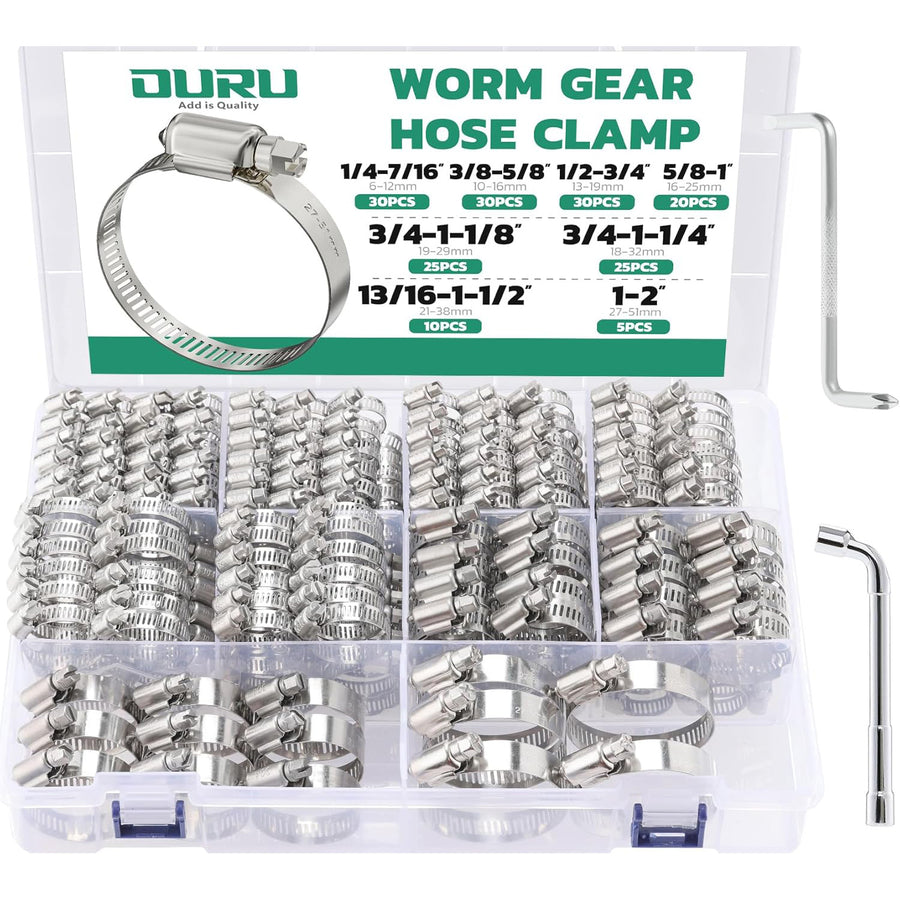
ONLY IF REPLACEMENT IS NEEDED
304 Stainless Steel Worm-Drive Hose Clamp Assortments
Correct the installation first. If your check confirms the current clamp is the wrong size or type, select a replacement by the measured hose O.D. over the fitting and the application requirement.
Selection reminder: Do not use a worm-drive clamp as a substitute when the OEM requires a spring clamp, T-bolt, or another specified design.
Compare Hose Clamp OptionsUse the listed adjustment range and product specifications before choosing.
Mistake #1: Choosing the Wrong Size Hose Clamp
Size matters when it comes to hose clamps. One of the most common errors is grabbing a clamp that’s either too small or too large for the hose you’re working on. If the clamp is undersized, you might not even get it around the hose (leading some DIYers to “force” it, which can damage the clamp or hose). On the other hand, an oversized clamp will bottom out (run out of threading) before it ever gets truly tight – resulting in a loose connection that leaks. As one industry source puts it, a clamp that’s too small may not fit at all, while a clamp that’s too big will fail to provide a consistent seal. The wrong size clamp is essentially unable to do its job.
How to avoid it: Always measure the outer diameter (O.D.) of your hose after the hose is installed on the fitting. This measurement ensures you account for the thickness of the fitting or barb inside the hose. Then choose a hose clamp whose adjustable range puts that diameter roughly in the middle. For example, if your hose (on the fitting) measures about 2 inches O.D., use a clamp that comfortably covers around the 2″ – 3″ range – not one that maxes out at 2 inches. It can be helpful to keep an assortment of clamp sizes on hand so you’re never tempted to use an almost-fit. Hose clamps come in a wide array of sizes: from tiny miniature hose clamps under 1 inch for small tubing, up to large heavy-duty 8 inch hose clamps or even 12 inch hose clamps for industrial hoses. Whether you need a small 1 inch hose clamp for a fuel line or a massive 6 inch hose clamp for a large pipe, using a properly sized clamp is the first step to a secure connection. In fact, using the wrong size (say trying to tighten a 3 inch hose clamp onto a hose meant for a 1.5 inch clamp) will either not seal at all or require dangerous over-tightening that damages the hose. Don’t fall into the trap of “making do” with the wrong size – it’s a surefire mistake that’s easy to avoid with a quick measurement and the right clamp.
Mistake #2: Incorrect Hose Clamp Positioning on the Hose
Even if you have the right clamp size, where and how you position it on the hose is critical. A very common mistake is placing the hose clamp in the wrong spot. If the clamp is too close to the end of the hose, there’s a high risk it could slide off under pressure. Conversely, if you position it too far back from the hose barb (the raised ridge on the fitting), the clamp might not compress the joint properly, leading to a poor seal. The general rule is to position the clamp just behind the barb or bead on the fitting – basically as close to the end of the hose as possible while still covering the barb fully. This way, the clamp is squeezing the hose against the fitting right over the barb, which helps prevent the hose from blowing off. If you place the clamp on top of the barb or bead, it won’t seal correctly (fluid can leak under the clamp at the gap created by the barb). And if the clamp sits beyond the barb on the bare hose, that section of hose isn’t actually over the fitting anymore – practically guaranteed to leak.
Another aspect of positioning is making sure the clamp is aligned straight (perpendicular) around the hose, not crooked or at an angle. An angled or slanted clamp – an easy mistake if you tighten in a hurry – can mean one side of the band bites into the hose more than the other. This uneven pressure might cut into the hose on one side and barely seal the other side. Over time or under vibration, a clamp that isn’t level is more likely to loosen or slip off. To avoid this, ensure the band is flat against the hose all the way around before you fully tighten it. If you notice the clamp “creeping” at an angle as you turn the screw, pause and reposition it.
How to avoid it: Follow the mantra: “right behind the barb, and square to the hose.” A good practice is to install the hose fully onto the fitting (push it until it bottoms out or until the hose covers the fitting’s barb completely) and then place the clamp about 1/4 inch from the hose end – which usually means it’s just on the hose side of the barb. For larger hoses (like 3″ hose clamps on big radiator hoses), you might position it around 3/8″ or 1/2″ from the end, but again just past the barb. Ensure there is hose visible on both sides of the clamp band: it should not be hanging off the end of the hose, nor sitting on top of the barb’s ridge. Before final tightening, orient the clamp’s screw in a reachable direction (so you can access it with a screwdriver or nut driver) and double-check that the clamp isn’t skewed. Taking these steps will give a uniform 360° seal. Remember, proper clamp placement is not arbitrary – it’s essential for a leak-free connection. As one experienced mechanic put it, the clamp should be as close as possible to the bead without climbing onto it, and never out past the hose end.
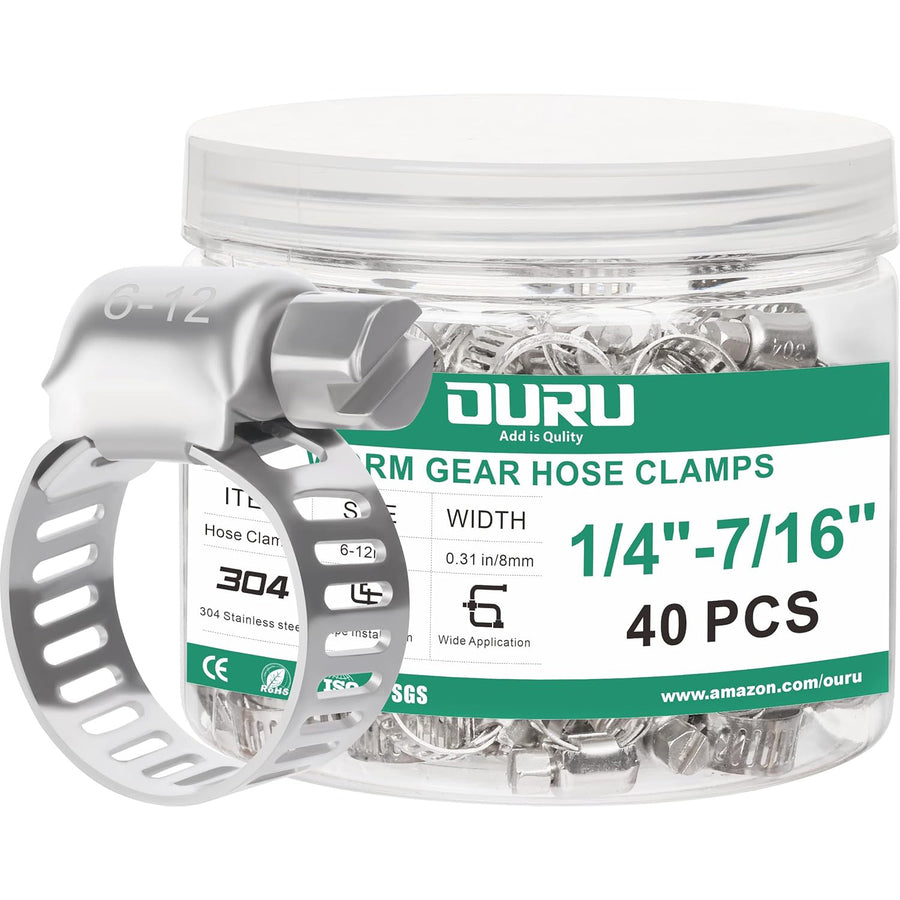
ONLY IF REPLACEMENT IS NEEDED
304 Stainless Steel Worm-Drive Hose Clamps
Correct the installation first. If your check confirms the current clamp is the wrong size or type, select a replacement by the measured hose O.D. over the fitting and the application requirement.
Selection reminder: Do not use a worm-drive clamp as a substitute when the OEM requires a spring clamp, T-bolt, or another specified design.
Choose Hose Clamp SizeUse the listed adjustment range and product specifications before choosing.
Mistake #3: Over-Tightening or Under-Tightening the Hose Clamp
Getting the clamp to the right tightness is a bit of a Goldilocks situation – too loose and it leaks, too tight and you risk damage. A very common mistake is to over-tighten the clamp, especially with worm-drive (screw) clamps. It’s tempting to crank down “as tight as possible” for good measure, but over-tightening can actually cut into the hose (especially if it’s rubber or silicone) or strip the threads of the clamp screw. If you see the hose extruding through the slots of the clamp band, that’s a clear sign of over-tightening – the clamp may be biting in so hard that it damages the hose and weakens the seal. On the flip side, under-tightening is also an issue – a clamp that isn’t tight enough will not compress the hose fully, and you’ll get leaks or the hose could pop off under pressure. Finding the right balance is key.
How to avoid it: First, it helps to know if the clamp manufacturer provides a recommended torque for the clamp. Many quality clamps have a spec (for example, a common stainless worm-gear clamp might have a max torque around 30-40 inch-pounds). Using a torque wrench is ideal – it takes the guesswork out by ensuring you don’t exceed the clamp’s limit while also achieving sufficient tightness. In practice, many DIYers don’t have a torque wrench handy for hose clamps, so the next best thing is to tighten just until the hose is compressed under the clamp band, but not deforming. A good method is to tighten gradually and give the hose a gentle twist or pull to see if it moves. If you can rotate the hose on the fitting by hand, it’s too loose. If the hose is starting to bulge or you hear cracking noises from rubber, it’s too tight! For worm-drive clamps, stop tightening when you feel resistance increase significantly – that’s usually when the clamp is snug. You shouldn’t have to “two-fist” the screwdriver; moderate hand force is typically enough. Remember that over-tightening doesn’t always create a better seal – in fact, it can create an uneven surface or cut that worsens the seal. Under-tightening, of course, just leaves things loose. Aim for the sweet spot: the clamp should be firm and not easily moved, but the hose underneath should remain intact (no deep imprints or tears). It’s not a bad idea to re-check clamp tightness after some use (say, after the engine warms up or after a day of operation) – sometimes a new hose-clamp assembly “settles” and may need a slight snug-up. If you follow the guidelines – snug, secure, but not crushing – you’ll avoid both extremes of this mistake.
Mistake #4: Using the Wrong Clamp Type for the Job
Not all hose clamps are created equal. Another frequent mistake is using the wrong type of clamp for your specific application. There are several types of hose clamps – the common worm-drive clamps (the ones with a screw and band), T-bolt clamps, spring clamps, ear (pinch) clamps, wire clamps, etc. Each has its pros and cons, and using the wrong style can cause problems. For instance, many automotive fuel lines use special fuel injection clamps that are a type of worm clamp but with a smooth inner lining (no perforations) – this lining protects the hose from being cut by the slots in a standard worm-drive clamp. If you replace a fuel line’s lined clamp with a regular worm gear clamp (with slotted band), you risk damaging the hose and causing a leak. Similarly, spring clamps (a type of constant-tension clamp) are used on coolant hoses in modern cars because they automatically adjust with temperature changes. If you swap a spring clamp for a basic worm clamp (which doesn’t adjust as the hose expands/contracts), you might end up with a leak in extreme cold or heat. In marine applications, using a normal steel clamp instead of a marine-grade stainless clamp can result in rapid corrosion – the clamp might literally rust through or seize up, failing when you least expect it. And for high-pressure hydraulic lines or large diameter hoses, a standard small band clamp might not hold; you might need a heavy-duty T-bolt clamp or multiple worm clamps to secure the hose under those conditions.
How to avoid it: Always consider the application requirements and choose a clamp designed for that job:
Pressure: If you’re dealing with high pressures (e.g., turbocharger hoses, heavy machinery, or large 10 inch hose clamps on industrial pipes), opt for heavy-duty clamps like T-bolt clamps or wide-band clamps that distribute force more evenly. A regular mini worm clamp won’t cut it on a big job where a heavy duty stainless steel hose clamp is needed.
Material & Environment: Match the clamp material to the environment. Use stainless steel worm gear clamps for any outdoor, marine, or corrosive environment – they resist rust. (Pro tip: look for 316 stainless if you need the highest corrosion resistance, as in marine hose clamps for boats). Avoid using cheap iron or zinc-plated clamps in wet or salty conditions; they’ll corrode fast and fail. Also, if working with fuel or chemical lines, ensure the clamp material won’t react – sometimes brass or specialized plastic clamps are used for chemical compatibility.
Hose Type: Soft silicone or rubber hoses can be prone to "cutting" by clamp edges. For these, a lined clamp or a clamp with rolled edges (like many of Ouru’s clamps) helps prevent damage. If you have a very small hose (vacuum line, 3/8" fuel hose, etc.), you might need a mini hose clamp designed for small diameters – these smaller clamps (#4, #6, etc.) have narrower bands suitable for tight spaces.
Specialty uses: For example, “no-hub” pipe couplings in plumbing use a different clamping mechanism (usually a wide band with a screw, often provided with the coupling). Using a generic hose clamp on a no-hub soil pipe could violate code and leak. Likewise, ear clamps are often used for air lines or semi-permanent connections – these require crimping with pinch clamp pliers and are one-time use. Know when a job calls for these specialty clamps versus a reusable worm-drive clamp.
In summary, choose the right clamp design for your task. Don’t try to secure a high-pressure hydraulic line with a tiny worm clamp (a proper hydraulic clamp or pipe clamp is needed there), and don’t use a flimsy wire clamp where a robust worm or T-bolt is called for. Using the wrong clamp type is like using the wrong tool – it might kind of work initially, but it often leads to failure or a jury-rigged result. When in doubt, research the recommended clamp for your specific hose and fluid. Manufacturers and trusted guides often specify when a certain kind of clamp must be used (for instance, fuel injection hose clamps on fuel injection hoses, constant-tension spring clamps on cooling system hoses, etc.). Following these guidelines will save you from headaches down the road.
ONLY IF REPLACEMENT IS NEEDED
304 Stainless Steel Worm-Drive Hose Clamp Assortments
Correct the installation first. If your check confirms the current clamp is the wrong size or type, select a replacement by the measured hose O.D. over the fitting and the application requirement.
Selection reminder: Do not use a worm-drive clamp as a substitute when the OEM requires a spring clamp, T-bolt, or another specified design.
Compare Hose Clamp OptionsUse the listed adjustment range and product specifications before choosing.
Mistake #5: Not Ensuring Proper Hose Fitment with the Clamp
The final mistake on our list happens before you even tighten the clamp: failing to ensure the hose itself is properly fitted on the nipple/pipe. In other words, if the hose isn’t seated or sized correctly, the clamp can’t save you! One scenario is when the hose isn’t pushed fully onto the fitting (perhaps due to haste or an awkward angle). If there’s a gap or if the hose only barely covers the barb, your clamp is gripping more air than hose – that connection will be weak and prone to leaking or coming apart. In fact, if the hose is not inserted all the way to where it should be, people often compensate by over-tightening the clamp to try to force a seal, but any jostling or pressure can break that tenuous seal. Proper fit also means using the correct hose size for the fitting. For example, don’t try to clamp a 1″ hose onto a 3/4″ barb by just tightening the heck out of it. It might seem to hold at first, but you’re actually at high risk of leaks or the hose popping off. A real-world insight: using a hose that’s even a couple millimeters too large for a fitting will require excessive clamp force to seal, often resulting in the clamp cutting into the hose and a worse leak. It’s like trying to put a size-8 shoe on a size-6 foot and strapping it extra tight – not a good idea.
Another aspect of proper fitment is the condition of the hose and mating parts. If you clamp onto an old, hardened hose that has an existing groove from a previous clamp, you may not get a good seal on a new clamp in a different position. Similarly, if the metal tube or barb has corrosion or burrs, those should be addressed before clamping a hose over them. Always make sure the hose end and fitting are clean and free of debris. Replace old or damaged hoses rather than reusing them with new clamps if you want a reliable connection – a new clamp on a degraded hose can still leak due to cracks or the old imprint left behind. In professional settings, it’s recommended to change out the hose when you’re changing clamps, to ensure optimal sealing.
How to avoid it: Take a moment during installation to verify the hose is fully seated on the fitting. Push it on firmly until it can’t go further – often you’ll feel it hit a stop or see it cover all the barbs on the pipe. For hoses that are a tight fit, a tiny dab of lubricant or a bit of heat (warm water soak for a minute) can help slide it on all the way. Ensure the hose size matches the fitting; if it’s significantly off, get the right hose rather than hoping the clamp will “shim” the difference. Inspect the mating surfaces: the portion of the fitting under the clamp should be smooth and round. If it’s a ribbed or beaded fitting, make sure the hose goes past the first rib so the clamp can reside behind it as discussed earlier. If you’re re-clamping an existing hose, try to align the new clamp over the same spot (groove) as the old one, or cut off the end of the hose past the old groove to give a fresh section to clamp on – otherwise a groove can leak. Ultimately, a clamp is only as good as the hose and fitting it’s holding together. Good fitment means the clamp can apply even pressure all around with no weird gaps or required heroics. By paying attention to this detail, you’ll prevent those mysterious slow leaks that persist even when the clamp seems tight.
When you use quality Ouru clamps in tandem with properly fitted hoses, you get a rock-solid seal. Ouru clamps are built to conform to the hose as they tighten, but they work best when the hose is correctly in place. So make sure your hose is sitting pretty, and let our clamps do the rest! If you find you’re struggling to get a hose to stay on even with a clamp, consider picking up a new hose or proper adapter from our store – sometimes the fix is a fresh piece of hose (and of course, a trusty Ouru clamp to secure it). Our goal is to set you up for success: the right hose, the right clamp, and a job done right. With the basics of fitment covered, Ouru clamps will help keep everything leak-free. 🔩💧
Inspect the Hose and Fitting Before Reinstalling
After correcting the identified mistake, remove pressure and inspect the full sealing area. Replace a hose that is cracked, hardened, swollen, cut, or permanently grooved. Check the fitting for corrosion, sharp edges, cracks, distortion, or a damaged barb. A new clamp cannot repair a damaged sealing surface.
ONLY IF REPLACEMENT IS NEEDED
304 Stainless Steel Worm-Drive Hose Clamp Assortments
Correct the installation first. If your check confirms the current clamp is the wrong size or type, select a replacement by the measured hose O.D. over the fitting and the application requirement.
Selection reminder: Do not use a worm-drive clamp as a substitute when the OEM requires a spring clamp, T-bolt, or another specified design.
Compare Hose Clamp OptionsUse the listed adjustment range and product specifications before choosing.
Reinstall the Connection Correctly
- Clean and dry the hose and fitting.
- Push the hose fully onto the fitting and past the barb or bead.
- Place the correctly sized and approved clamp squarely just behind the barb.
- Tighten gradually and evenly—secure, but not crushing the hose.
Before re-tightening, see How to Tighten a Hose Clamp for the correct tightening method and stop signs.
Leak-Test and Recheck Under Operating Conditions
Restore pressure or bring the system to its normal operating temperature while watching the joint. Check for seepage, hose movement, clamp migration, or loss of pressure. Shut the system down safely and recheck after the first heat or pressure cycle. Do not keep tightening a leaking joint blindly—return to the five-point check and inspect for damage.
ONLY IF REPLACEMENT IS NEEDED
304 Stainless Steel Worm-Drive Hose Clamp Assortments
Correct the installation first. If your check confirms the current clamp is the wrong size or type, select a replacement by the measured hose O.D. over the fitting and the application requirement.
Selection reminder: Do not use a worm-drive clamp as a substitute when the OEM requires a spring clamp, T-bolt, or another specified design.
Compare Hose Clamp OptionsUse the listed adjustment range and product specifications before choosing.
Conclusion
Hose clamp installation is a simple task, but as we’ve seen, the devil is in the details. By avoiding these common mistakes – choosing the correct size clamp, positioning it properly on the hose, tightening it just right, selecting the appropriate clamp type, and ensuring the hose is well-fitted – you’ll save yourself from the headaches of leaks, slips, and breakdowns. Whether you’re working with a small 3" hose clamp on a home project or a larger 8 inch hose clamp on an automotive or marine application, the principles remain the same. Taking the time to do it right means your connections will be secure and long-lasting. Always remember: a hose clamp’s job is to provide uniform pressure and hold the hose in place against pressure trying to push it off – it can only do that if you install it correctly. The good news is these are easy pitfalls to avoid now that you know what to look for.
Leave a comment